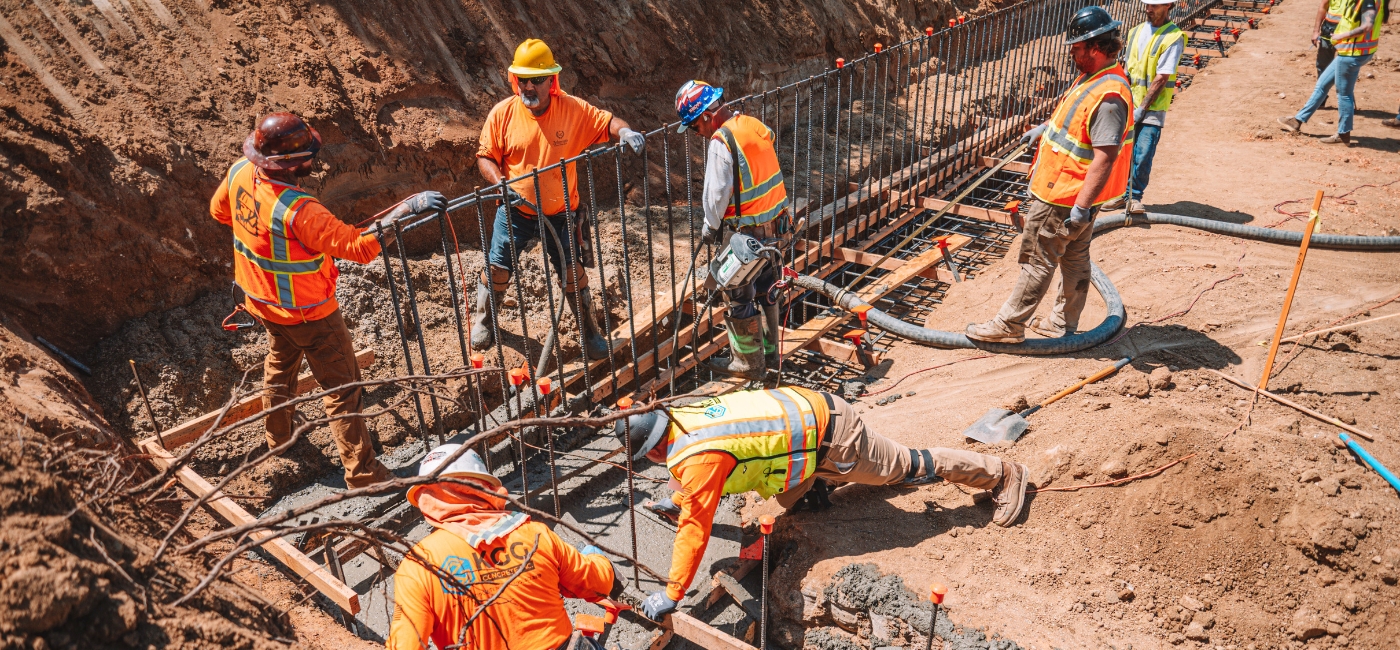
Commercial construction in Orange County serves diverse sectors across a region of 3.2 million residents spanning 948 square miles from coastal communities to inland valleys. The county’s economy encompasses retail corridors along major arterials, office campuses housing professional services and technology companies, and industrial facilities near major transportation networks supporting logistics, manufacturing, and distribution operations.
WakeCo delivers commercial construction throughout Orange County with specialized expertise in retail developments, office buildings, and industrial facilities. Our approach recognizes that retail, office, and industrial projects each demand distinct construction strategies, material specifications, and operational understanding.
Retail Construction Across Orange County
Shopping Center Development
Orange County’s retail landscape spans regional malls like South Coast Plaza and Irvine Spectrum Center to neighborhood shopping centers serving local communities. Shopping center construction coordinates shell buildings providing weather-tight structures with base utilities while tenant improvements customize spaces for specific retailers.
Anchor tenants occupying 20,000-50,000 square feet drive center economics and construction phasing. Their commitments secure financing while their opening dates influence inline tenant schedules. Construction sequences anchor spaces first allowing smaller tenants to complete buildouts supporting coordinated grand openings.
Common area elements establish the framework serving all tenants. Parking lot construction delivers sufficient stall counts satisfying municipal requirements while appropriate grading and drainage systems eliminate water accumulation. Shared utilities including water service, fire protection, sanitary sewer, and storm drainage serve multiple tenants.
Inline Retail and Restaurant Construction
Inline retail spaces ranging 1,200-5,000 square feet require efficient construction supporting compressed schedules. Storefront design creates customer appeal through large display windows, inviting entries, and exterior materials conveying quality matching merchandise positioning. Interior construction emphasizes customer circulation while lighting systems highlight products creating inviting atmospheres.
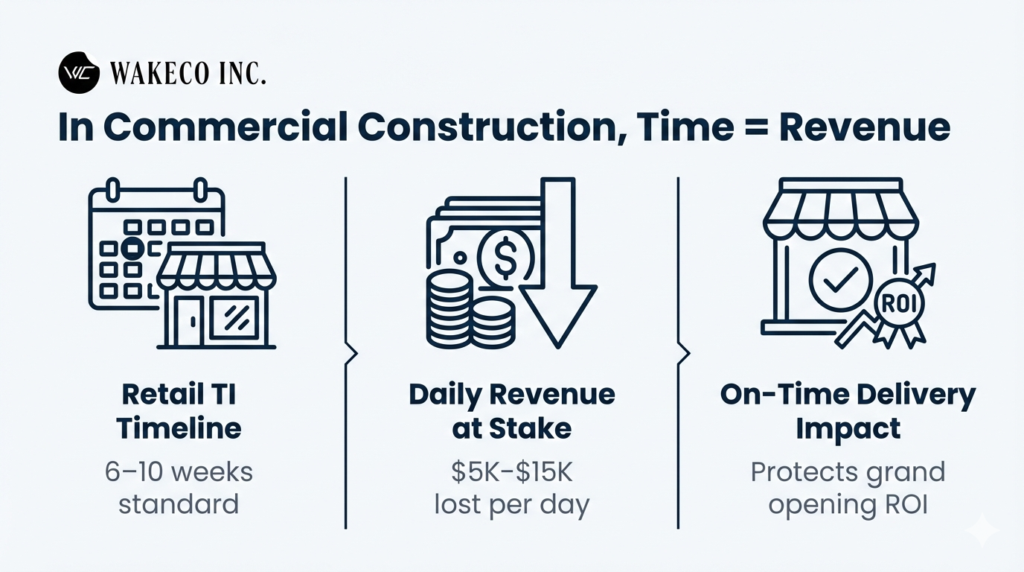
Construction timelines compress to 6-10 weeks minimizing revenue loss during tenant transitions. Streamlined material procurement, dependable trade coordination, and methodical scheduling support on-time delivery critical to retail success.
Restaurant construction balances the dining atmosphere with commercial kitchen functionality. Commercial kitchen construction requires a health department plan review before permits are issued. Equipment layouts separate raw and cooked food preparation while Type I exhaust hoods over cooking equipment require fire suppression systems and substantial exhaust capacity with make-up air systems replacing exhausted air.
Office Construction Throughout Orange County
Office Building Development
Orange County’s office markets range from Class A towers in Newport Beach and Irvine to suburban office parks in cities like Anaheim and Santa Ana. Office construction addresses varying tenant needs from corporate headquarters requiring large floor plates to professional services occupying smaller suites within multi-tenant buildings.
Floor plate efficiency maximizes leasable area while accommodating building cores including elevators, restrooms, mechanical rooms, and stairwells. Building systems support diverse tenant requirements without limiting flexibility. HVAC systems deliver sufficient capacity for typical office loads with distribution allowing individual zone control.
Office Tenant Improvements
Office tenant improvements adapt shell spaces or existing offices for specific business operations. Space planning balances private offices, open workstations, conference rooms, and collaborative areas supporting organizational workflows. Demising walls between tenants require fire ratings extending from floor deck to roof deck maintaining proper separations.
HVAC modifications address new layouts and occupancy patterns. Ductwork rerouting serves relocated spaces while VAV boxes offer zone control. Technology infrastructure supports modern business operations through structured cabling systems terminating at telecommunications rooms with proper pathways to work areas.
Electrical circuits serve computer equipment and servers while lighting systems use LED fixtures with controls meeting Title 24 requirements. Data cabling enables connectivity throughout office environments supporting both wired and wireless network infrastructure.
Medical Office Construction
Medical office buildings throughout Orange County serve healthcare systems and private practices. Medical construction addresses specialized requirements including exam rooms with proper dimensions, medical gas systems where required, and enhanced HVAC delivering sufficient air changes and filtration levels.
Radiology suites require lead-lined walls protecting adjacent spaces from radiation. Lead sheet installation includes proper overlapping and inspection verification while equipment support addresses heavy loads from imaging machines requiring reinforced floors or structural accommodations.
Industrial Construction for Logistics and Manufacturing
Warehouse and Distribution Facilities
Orange County’s industrial markets near major transportation corridors support warehouse and distribution facilities serving e-commerce, manufacturing, and logistics operations. Modern warehouses require 32-36 foot clear heights accommodating high-density racking systems maximizing storage capacity within building footprints.
Tilt-up concrete construction delivers economical structural systems supporting roof loads while maintaining unobstructed interior space. Panel design accounts for seismic forces, roof attachments, and utility penetrations. Column spacing typically ranges 50-60 feet creating flexible bay configurations.
Loading dock design impacts operational efficiency. Dock-high doors with levelers and seals accommodate standard trailers while grade-level doors serve smaller vehicles. Sufficient dock positions prevent bottlenecks during peak operations. Cross-dock configurations allow direct product transfer from receiving to shipping.
Floor specifications support heavy loads from forklifts, pallet jacks, and racking systems. Concrete slabs require appropriate thickness, steel reinforcement, and hard-troweled finishes creating flat, durable surfaces. Laser-guided screed systems produce floor flatness specifications critical for high-rack storage.
Manufacturing Facility Construction
Manufacturing facilities coordinate production equipment, heavy utilities, and workflow-driven layouts. Equipment foundations support machinery requiring vibration isolation, precise leveling, or substantial mass. Structural floors handle point loads from equipment concentrated in specific locations.
Three-phase electrical service delivers power for production equipment, HVAC systems, and facility lighting. Electrical capacity planning accounts for equipment startup loads and simultaneous operation patterns. Process utilities including compressed air, process water, and waste removal serve production equipment through properly sized and labeled piping systems.
Industrial ventilation addresses process emissions, heat generation, and air quality requirements. General ventilation delivers air changes removing heat and odors while local exhaust captures emissions at source points maintaining proper indoor air quality.
Site Development for Commercial Projects
Parking and Access
Commercial sites require substantial parking meeting municipal codes. Retail uses demand 4-5 spaces per 1,000 square feet while office uses require 3-4 spaces per 1,000 square feet. Industrial facilities need fewer customer spaces but provide employee parking and truck maneuvering areas.
Parking lot design balances stall counts with efficient circulation. Drive aisles accommodate vehicle turning while directional signage guides traffic flow. Landscaping requirements typically mandate 10-15% of paved areas include planting islands and perimeter landscaping providing shade and storm water management.
Truck access for industrial and retail projects requires adequate turning radii, sufficient pavement thickness supporting heavy loads, and proper vertical clearances. Loading areas separate from customer parking maintaining safety and operational efficiency.
Utility Infrastructure
Commercial developments require substantial utility infrastructure. Water service sizes based on domestic fixture counts and fire protection demands. Fire service requires dedicated lines, backflow prevention, and proper hydrant placement meeting fire department requirements.
Sanitary sewer capacity accommodates fixture unit counts with grease interceptors serving food service uses. Storm drainage systems collect roof and site runoff directing flows to detention basins or municipal systems. Low Impact Development features promote infiltration reducing runoff volumes.
Orange County’s Regulatory Environment
Municipal Permitting Variations
Orange County’s 34 incorporated cities each maintain separate building departments with varying processes, timelines, and requirements. Plan review approaches differ between jurisdictions—some offer expedited review programs while others maintain traditional timelines. Understanding local procedures prevents delays.
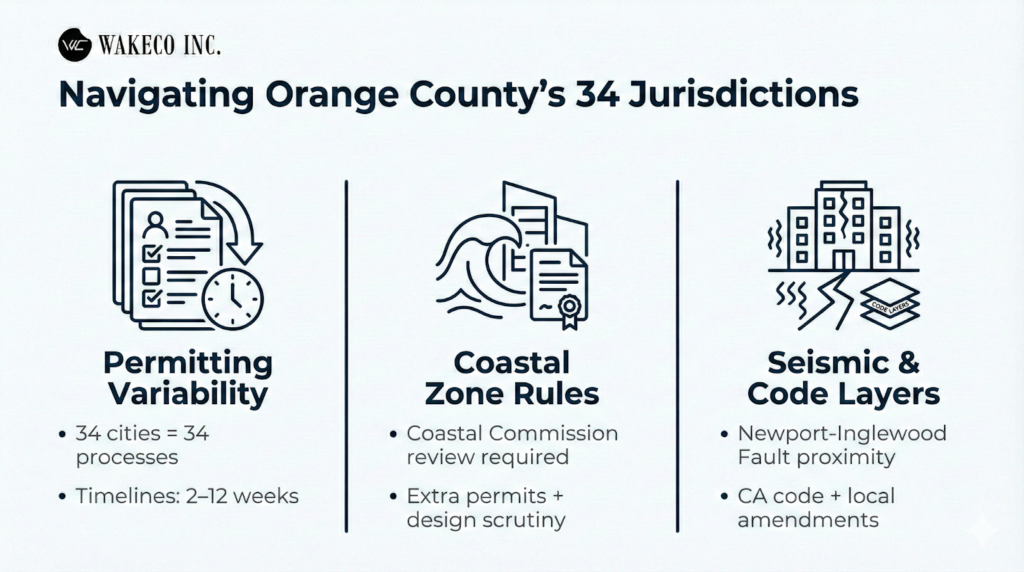
Coastal Commission jurisdiction affects projects within designated coastal zones. Development near coastlines requires additional review examining environmental impacts, public access, and design compatibility with coastal resources adding timeline and planning considerations.
Seismic Design Requirements
Orange County’s proximity to multiple fault systems including the Newport-Inglewood and San Andreas faults requires proper seismic design. Structural systems must resist lateral loads through moment frames, braced frames, or shear walls depending on building height and configuration.
Non-structural components including mechanical equipment, ceilings, and partitions require proper bracing preventing damage during seismic events. Special inspection requirements verify proper installation of critical seismic elements throughout construction.
WakeCo’s Multi-Sector Commercial Expertise
Our Orange County experience encompasses retail developments from shopping centers to individual tenant improvements, office construction from ground-up buildings to tenant improvements, and industrial facilities including warehouses and manufacturing plants. This diverse portfolio informs our understanding of the distinct requirements each sector demands.
We coordinate with specialized subcontractors experienced in commercial systems across all building types. Our preconstruction services include detailed estimating, permit strategy addressing varying municipal requirements, schedule development, and value engineering. Communication throughout projects addresses stakeholder coordination while systematic quality control ensures delivery meeting commercial standards.
Material procurement accounts for lead times on specialty items while trade coordination prevents conflicts. Punch list processes ensure complete delivery supporting planned occupancy dates across retail, office, and industrial applications.
Building Orange County’s Commercial Landscape
Commercial construction in Orange County’s retail, office, and industrial sectors requires specialized expertise recognizing the distinct demands each building type presents. Operational efficiency, finish quality, structural capacity, and regulatory compliance all depend on contractors understanding these specialized requirements.
Ready to discuss your Orange County retail, office, or industrial project? Contact WakeCo for comprehensive commercial construction services. We’ll review your requirements, explain our approach, and demonstrate how our multi-sector expertise delivers successful outcomes. Call today or request a consultation online. Let’s build your project right.
Frequently Asked Questions
What types of commercial projects does WakeCo handle in Orange County?
We construct retail shopping centers and tenant improvements, office buildings and tenant improvements, warehouse and distribution facilities, and manufacturing plants across Orange County’s diverse commercial sectors.
How long does commercial construction typically take?
Retail tenant improvements require 6-12 weeks, office tenant improvements need 8-12 weeks, restaurant construction takes 10-14 weeks, and warehouse buildings span 6-10 months. Ground-up office buildings require 12-18 months.
What makes retail, office, and industrial construction different from each other?
Retail emphasizes customer appeal and compressed schedules, office prioritizes technology infrastructure and flexible layouts, industrial requires structural capacity and operational efficiency with distinct material specifications and systems.
How does WakeCo navigate Orange County’s multiple jurisdictions?
We maintain relationships with building departments across Orange County cities understanding their specific processes, timelines, and requirements preventing delays and ensuring efficient permit processing.
Why choose WakeCo for Orange County commercial construction?
We bring specialized experience across retail, office, and industrial building types with Orange County knowledge navigating multiple jurisdictions and established trade relationships supporting reliable execution meeting schedule and quality commitments.