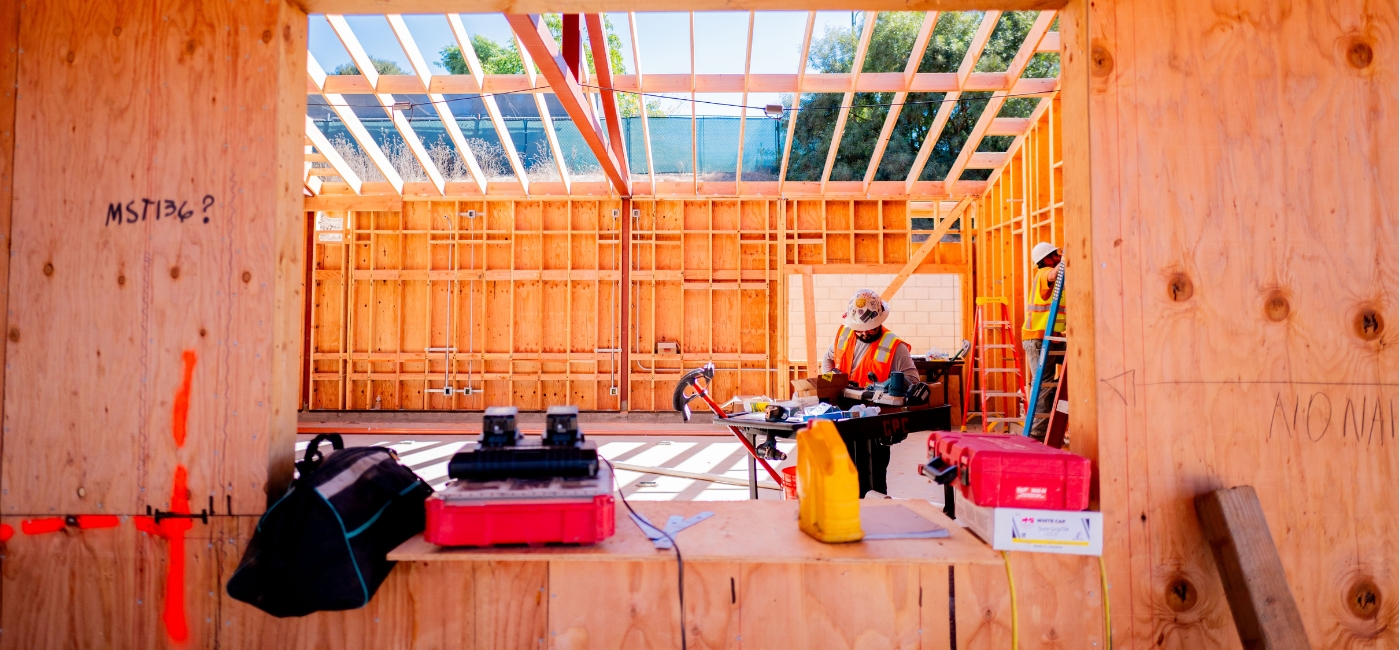
Orange County businesses leasing commercial space face a construction process that determines whether their environment supports operations or undermines them. The tenant improvement process — from lease negotiation through occupancy — exposes gaps between what landlords provide, what contractors deliver, and what businesses actually need. Navigating those gaps requires contractors who treat preconstruction as seriously as construction itself.
WakeCo delivers commercial tenant improvements throughout Orange County with experience across office, retail, and restaurant environments. Our approach addresses the planning integration, landlord coordination, and construction execution these projects require.
Office Tenant Improvements
Open Office and Collaborative Environments
Modern Orange County office tenants increasingly favor open environments over private office configurations — a shift that carries distinct construction implications. Acoustic performance becomes critical when private offices disappear. HVAC distribution must serve open floor plates without the partition-defined zones that traditional office layouts create. Lighting design carries more visual weight when ceilings are exposed.
Getting these systems right requires coordination during design rather than field adjustments after occupancy. WakeCo builds open office environments with acoustic treatment, mechanical distribution, and lighting design integrated from the start — not retrofitted after tenants discover the space doesn’t perform as intended.
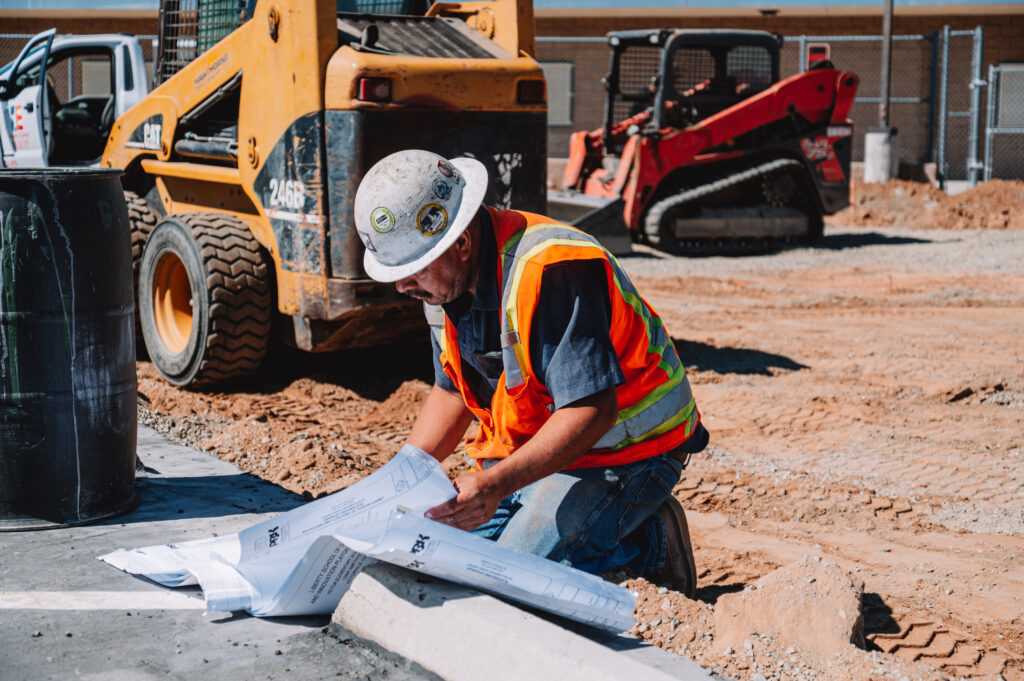
Technology-Intensive Office Buildouts
Orange County’s technology sector drives demand for office environments where data infrastructure, power density, and cooling capacity matter as much as finish quality. Server rooms require dedicated cooling, UPS systems, and conduit capacity that standard tenant improvement allowances rarely anticipate.
Structured cabling pathways, wireless access point locations, and audiovisual infrastructure must be coordinated with electrical and framing before walls close. WakeCo coordinates technology requirements with electrical and low-voltage contractors during design, preventing the retrofits that reopen completed work and compress move-in timelines.
Lease Obligations and Restoration Planning
Orange County office leases frequently impose restoration obligations requiring removal of above-standard improvements at lease end. Custom millwork, raised flooring systems, and specialty ceiling assemblies that enhance the space during occupancy become liabilities when the lease expires if restoration costs weren’t factored into the original investment decision.
WakeCo reviews lease exhibit requirements during preconstruction, identifying restoration obligations before design decisions commit tenants to improvements that carry end-of-lease cost consequences they didn’t anticipate when signing.
Retail Tenant Improvements
Brand Environment Construction
Orange County retail tenants operate in a market where the physical environment communicates brand identity as directly as marketing does. Storefront configurations, interior circulation, fixture infrastructure, and lighting design each contribute to the customer experience that drives purchase decisions and repeat visits.
Construction quality determines whether that environment holds up through a full lease term or requires premature intervention. Finishes that deteriorate, lighting that fails, and fixtures that loosen under daily use reflect poorly on the brand regardless of how appropriate the design was at opening. WakeCo specifies retail buildouts with operational durability requirements driving material selections alongside aesthetic intent.
Anchor and Inline Tenant Coordination
Orange County shopping centers involve construction coordination between anchor tenants, inline tenants, and landlord base building systems that creates dependencies inexperienced contractors routinely mismanage. Shared mechanical systems, common area interfaces, and landlord-controlled utilities affect construction sequencing in ways that single-tenant projects don’t present.
WakeCo coordinates retail buildouts against center-specific requirements, confirming base building system interfaces and landlord approval requirements before construction begins rather than discovering coordination obligations mid-project.
Second-Generation Retail Spaces
Second-generation retail spaces offer cost and schedule advantages that depend entirely on whether the prior configuration aligns with the incoming tenant’s requirements. Reusing existing HVAC distribution, electrical panels, and plumbing rough-in reduces construction scope when compatible. Removing incompatible prior improvements costs more than building from shell when the existing infrastructure conflicts with the new layout.
Evaluating second-generation space conditions before lease execution determines whether the cost assumptions driving the deal are realistic. WakeCo assesses existing infrastructure against incoming tenant requirements during preconstruction, confirming that reuse assumptions built into budgets reflect actual site conditions.
Restaurant Tenant Improvements
Kitchen Infrastructure and Health Department Compliance
Orange County restaurant construction combines commercial kitchen complexity with health department compliance requirements that run on an independent regulatory track from building permits. Kitchen exhaust systems, grease interceptors, gas infrastructure, and NSF-compliant finishes create construction demands that contractors without restaurant experience consistently underprice.
Health department plan review examines finish specifications, equipment placement, and ventilation design that building departments don’t evaluate. Non-compliant materials or incorrect installations discovered at final inspection require correction before occupancy — at the worst possible point in the project timeline.
WakeCo integrates health department requirements into construction documents from the start, scheduling pre-inspections that identify deficiencies when correction is straightforward rather than critical-path.
Equipment Coordination and Utility Infrastructure
Restaurant equipment specifications change between preliminary design and final procurement more often than operators anticipate. Gas line sizing confirmed against preliminary equipment lists frequently proves inadequate when actual equipment submittals reflect higher BTU loads. Electrical panel capacity sized to early layouts requires upgrades when final equipment configurations demand more than original calculations assumed.
WakeCo holds utility rough-in against confirmed equipment submittals rather than preliminary drawings, preventing the infrastructure mismatches that delay kitchen commissioning and push opening dates past the timelines operators have communicated to staff and vendors.
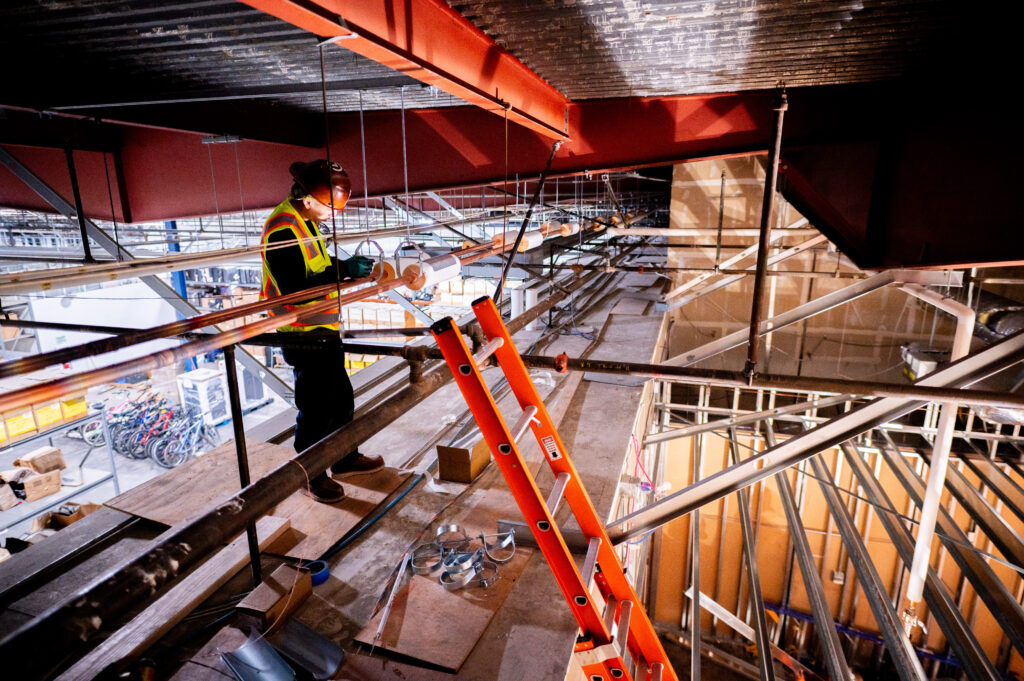
Front-of-House Durability
Front-of-house finishes in Orange County restaurants endure traffic volumes and cleaning chemical exposure that standard commercial materials cannot sustain. Flooring, wall surfaces near service areas, and bar finishes must balance aesthetic intent with the operational performance that daily restaurant use demands.
Finishes that deteriorate within the first year require replacement during operating hours — one of the more disruptive maintenance problems restaurants face. WakeCo specifies front-of-house materials against operational durability requirements, delivering environments that maintain their appearance through the full lease term.
Navigating Orange County’s Tenant Improvement Permit Process
Orange County’s 34 cities each administer building permits independently. Irvine, Anaheim, Santa Ana, and coastal municipalities each maintain distinct review timelines and documentation requirements that affect preconstruction planning across the market. Standard commercial tenant improvement permits complete review in 3–6 weeks with complete submittals — incomplete applications routinely double that timeline.
Landlord approval of construction documents adds 2–4 weeks before permit applications can proceed. Managing both processes simultaneously keeps preconstruction on schedule. Missing either step or submitting incomplete documents creates resubmittal cycles that push occupancy dates and erode budgets through extended carrying costs.
WakeCo structures submittals addressing both landlord and building department requirements before initial filing. Jurisdiction-specific requirements are identified early, parallel review processes are managed throughout preconstruction, and construction is scheduled to begin immediately upon permit issuance.
Building the Right Foundation for Your Orange County Tenant Improvement
Orange County businesses that treat preconstruction as seriously as construction occupy functional spaces on schedule with budgets intact. Those that defer planning until construction is underway pay for it through change orders, permit delays, and spaces that require correction after move-in when correction is most disruptive.
WakeCo brings the market knowledge and construction experience Orange County tenant improvements require. Contact us to discuss your project and learn how our approach delivers spaces ready for occupancy on schedule and within budget.
Frequently Asked Questions
How long do commercial tenant improvements take in Orange County?
Standard office and retail buildouts require 6–10 weeks of construction following permit approval. Restaurant projects run 10–16 weeks depending on kitchen complexity. Add 6–10 weeks for design, landlord approval, and permitting. Total timelines from lease execution to occupancy commonly run 3–5 months for office and retail, 5–7 months for restaurants.
What tenant improvement allowance terms matter most in Orange County?
Allowance scope, landlord approval timelines, permitted modifications to base building systems, and restoration obligations at lease end. Understanding these before execution prevents budget surprises and design constraints that surface mid-construction when they’re expensive to resolve.
How do second-generation spaces affect tenant improvement costs?
Compatible second-generation infrastructure reduces construction scope and cost significantly. Incompatible prior improvements cost more to remove than building from shell in some configurations. Evaluating existing conditions against incoming requirements before lease execution determines whether reuse assumptions built into budgets are realistic.
What makes restaurant tenant improvements more expensive than office or retail?
Commercial kitchen systems — exhaust, grease interceptors, gas infrastructure, NSF-compliant finishes — add cost and complexity beyond standard construction. Health department coordination adds regulatory obligations beyond building permits. Restaurant build out costs in Orange County commonly range from $150–$300 per square foot depending on kitchen complexity and finish level.
When should Orange County businesses engage a tenant improvement contractor?
Before lease execution if possible. Preconstruction space evaluation confirms a location supports the intended use at the anticipated budget. Businesses that sign leases without contractor involvement frequently discover base building conditions or infrastructure limitations after they’re contractually committed — and those discoveries cost considerably more to address than they would have before signing.