San Diego’s industrial market spans logistics corridors near the port and airport, manufacturing clusters in Otay Ranch and Chula Vista, and light industrial parks throughout Kearny Mesa and Miramar. Construction in this market demands contractors who understand heavy utility infrastructure, operational performance requirements, and the jurisdictional complexity that industrial projects across San Diego’s municipalities present.
WakeCo delivers industrial construction throughout San Diego with experience across warehousing, manufacturing, food processing, and distribution facilities. Our approach addresses the infrastructure demands, permit coordination, and construction execution that industrial tenants and owners require to bring facilities online on schedule and within budget.
Industrial Facility Types and Construction Requirements
Warehouse and Distribution Construction
San Diego’s proximity to the port and Mexican border drives consistent demand for warehouse and distribution facilities requiring dock-high loading, heavy floor loading capacity, and clear span structures maximizing operational floor area. Concrete flatwork supporting racking systems requires design and finishing standards that general contractors without industrial experience routinely underspecify.
Dock infrastructure — pit levelers, dock seals, truck approach grades, and maneuvering area dimensions — affects daily operational efficiency in ways that become permanent once construction is complete. WakeCo builds warehouse facilities with operational requirements driving design decisions, preventing the functional deficiencies that surface after occupancy when correction requires demolition.
Warehouse lighting design, fire suppression system specifications, and electrical distribution for material handling equipment each carry operational consequences that standard commercial construction approaches don’t adequately address. Getting these systems right during design costs nothing extra — correcting them after occupancy costs considerably.
Manufacturing and Food Processing Facilities
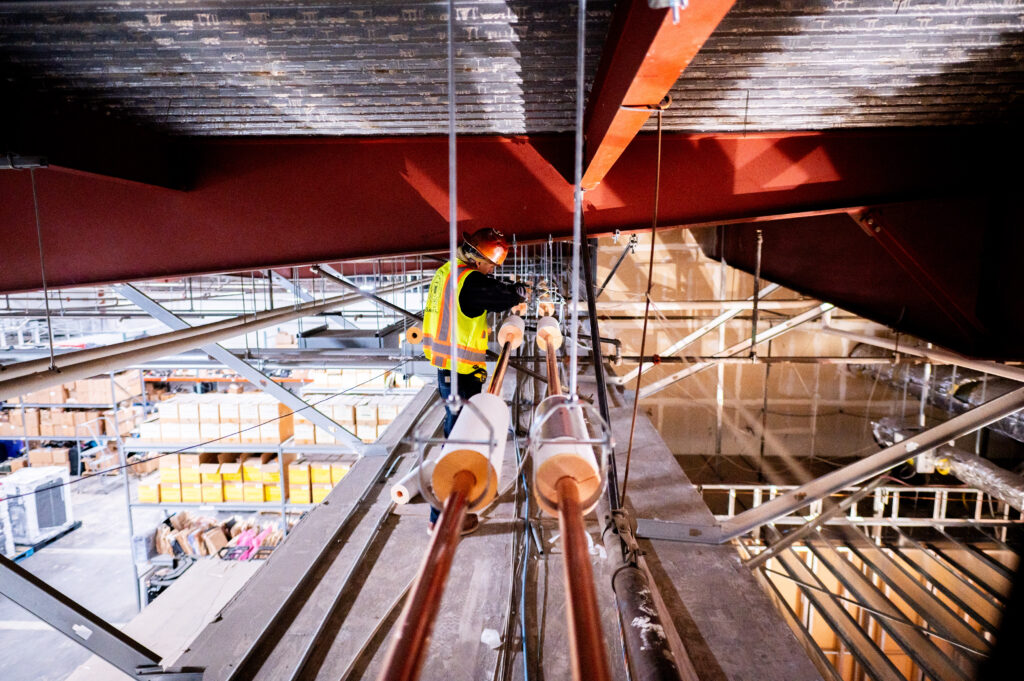
Manufacturing and food processing construction demands utility infrastructure scaled to production equipment loads rather than standard commercial requirements. Electrical service supporting three-phase equipment, compressed air distribution, process piping, and floor drain systems must be sized and positioned against confirmed equipment layouts before rough-in work begins.
Food processing facilities carry sanitation requirements affecting finish materials, wall and ceiling assemblies, drainage design, and ventilation systems that general contractors without food facility experience consistently underestimate. WakeCo coordinates manufacturing and food processing buildouts against equipment submittals and regulatory requirements, preventing the infrastructure mismatches that delay commissioning.
Cold Storage and Temperature-Controlled Facilities
Cold storage construction requires insulated panel systems, refrigeration infrastructure, floor heating preventing frost heave, and vapor barrier assemblies demanding coordination between structural, mechanical, and envelope contractors rarely encountered in standard commercial construction.
Refrigeration system rough-in must be sequenced correctly with surrounding construction — corrections after insulated panels are installed require demolition that costs multiples of what proper sequencing would have prevented. Equipment loads, utility requirements, and floor recess dimensions must be confirmed against actual equipment submittals before concrete is poured.
San Diego’s climate creates specific considerations for cold storage envelope design — thermal bridging at panel connections, door vestibule configurations, and condensation management require detailing that contractors without cold storage experience routinely omit from construction documents.
Site and Infrastructure Planning
Utility Capacity and Heavy Power Infrastructure
Industrial facilities routinely require electrical service, gas capacity, and water infrastructure exceeding what existing site utilities provide. Utility upgrades — transformer installations, service entrance upgrades, gas main extensions — carry lead times of 8–20 weeks that compress construction schedules when identified late in preconstruction.
WakeCo confirms utility capacity against facility requirements during the earliest phases of preconstruction, initiating utility upgrade processes before design is complete rather than discovering capacity limitations after construction documents are finalized.
Truck Access, Yard Configuration, and Site Development
Industrial site development requirements — truck turning radii, yard surface specifications, stormwater management, and landscaping compliance — affect both construction cost and daily operational performance. Yard surfaces inadequate for heavy truck loads deteriorate rapidly, creating maintenance obligations and operational disruptions that proper specification prevents.
San Diego County enforces stormwater management requirements affecting site grading, drainage infrastructure, and impervious surface calculations for industrial projects. WakeCo coordinates site development against operational requirements and regulatory standards during design, preventing permit obstacles and functional deficiencies that surface after construction.
Truck court dimensions that appear adequate on site plans frequently prove insufficient for the turning radii of actual delivery vehicles once operations begin. Confirming yard configurations against fleet specifications during design prevents the operational friction that accompanies facilities built to minimum code dimensions rather than real-world use requirements.
Navigating San Diego’s Industrial Permit Requirements
San Diego’s industrial municipalities — the City of San Diego, Chula Vista, El Cajon, and Santee among others — each administer permits independently, creating jurisdiction-specific review timelines affecting preconstruction planning.
Industrial projects frequently trigger additional agency coordination — fire department review for hazardous materials, air quality permits for manufacturing operations, and health department involvement for food processing facilities.
Incomplete submittals trigger resubmittal cycles that routinely double preconstruction timelines on industrial projects where schedule delays carry direct operational cost consequences. WakeCo structures permit submittals addressing all required agencies before initial filing, managing parallel review processes that keep approvals on pace with construction progress.
Building the Right Foundation for Your San Diego Industrial Project
San Diego industrial projects succeed or fail based on decisions made before construction begins. Utility capacity confirmed late, equipment coordination deferred, and permit strategy treated as an afterthought consistently produce the same outcomes — delays, infrastructure mismatches, and commissioning problems that drain the operating capital that facilities need for launch.
WakeCo brings the industrial construction experience and San Diego market knowledge these projects require. Contact us to discuss your facility requirements and learn how our approach delivers industrial spaces planned for performance and built to support operations long term.
Frequently Asked Questions
How long does industrial construction typically take in San Diego?
Standard warehouse and light industrial projects require 6–12 months from lease execution or land acquisition to occupancy. Preconstruction and permitting accounts for 8–16 weeks before construction begins. Manufacturing and food processing facilities with complex infrastructure run longer across all phases. Utility upgrade lead times of 8–20 weeks frequently control overall project schedules.
What drives industrial construction costs in San Diego?
Utility infrastructure upgrades, concrete flatwork specifications, dock equipment, clear span structural systems, and site development requirements are the primary cost drivers. Cold storage and food processing facilities carry significant additional costs from insulated assemblies, refrigeration systems, and sanitation requirements. Base site conditions — existing utility capacity, soil conditions, and prior use — affect costs considerably.
How do stormwater management requirements affect San Diego industrial projects?
San Diego County enforces stormwater management standards requiring treatment systems, detention infrastructure, or low-impact development measures depending on project size and site conditions. These requirements affect site grading, drainage design, and impervious surface calculations in ways that add cost and complexity when identified late in design. Early coordination prevents permit obstacles that delay construction start.
What makes food processing facility construction different from standard industrial work?
Sanitation requirements govern finish materials, wall and ceiling assemblies, drainage design, and ventilation systems in ways standard industrial construction doesn’t address. Health department plan review and inspections add regulatory coordination beyond standard building permits. Equipment coordination requirements — drain placement, utility stub-outs, floor recesses — demand confirmation against equipment submittals before concrete work begins.
When should industrial tenants and owners engage a contractor during project planning?
As early as possible — ideally before lease execution or site acquisition. Preconstruction evaluation confirms that a prospective site can support the intended use at the anticipated budget and schedule. Utility capacity limitations, site constraints, and permit complexity discovered after commitments are made consistently result in cost overruns and schedule delays that early contractor involvement would have prevented.