A construction contractor in Irvine serves a master-planned city of 310,000 residents across 66 square miles where corporate campuses, research facilities, and Class A office buildings create consistent demand for modern commercial development. The city’s business parks house Fortune 500 headquarters, technology companies, biotech firms, and professional services requiring construction to meet contemporary standards and sustainability certifications.
WakeCo delivers construction throughout Irvine with specialized expertise in modern commercial developments. Our approach recognizes that contemporary commercial projects emphasize sustainable design, advanced building systems, amenity-rich environments, and technology infrastructure supporting modern business operations.
Modern Office Development
Class A Office Construction
Irvine’s office market emphasizes Class A buildings offering premium finishes, efficient floor plates, and extensive amenities attracting corporate tenants. Floor-to-ceiling heights of 9-10 feet create open, light-filled environments while column spacing of 30 feet provides layout flexibility without interior obstructions.
Building envelopes emphasize energy performance and occupant comfort. High-performance glazing systems use low-E coatings, proper solar heat gain coefficients, and thermal breaks minimizing heat transfer. Curtain wall systems provide weather-tight performance while accommodating thermal movement and seismic displacement without compromising building integrity.
Lobby and common areas establish first impressions through material quality and design sophistication. Natural stone, architectural metal panels, and feature lighting create professional environments. Building directories, security desks, and elevator lobbies coordinate circulation while reflecting building positioning within competitive markets.
Open Office Environments
Modern office layouts favor open plans with minimal private offices maximizing collaboration and space efficiency. Workstation configurations use lower panel heights improving sightlines and natural light penetration while acoustic solutions address noise concerns through sound-masking systems, high-performance ceiling tiles, and strategic placement of enclosed spaces.
Glass-fronted conference rooms and offices maintain visual openness while providing acoustic separation for focused work and confidential discussions. Frameless glass systems with minimal mullions preserve clean aesthetics while doors use proper seals and gaskets ensuring sound isolation.
Flexibility supports changing organizational needs through movable furniture systems, accessible power and data distribution, and HVAC systems accommodating various layouts. Raised floor systems provide ultimate flexibility for power, data, and HVAC distribution though ceiling-based systems prove more economical for many applications.
Amenity Spaces
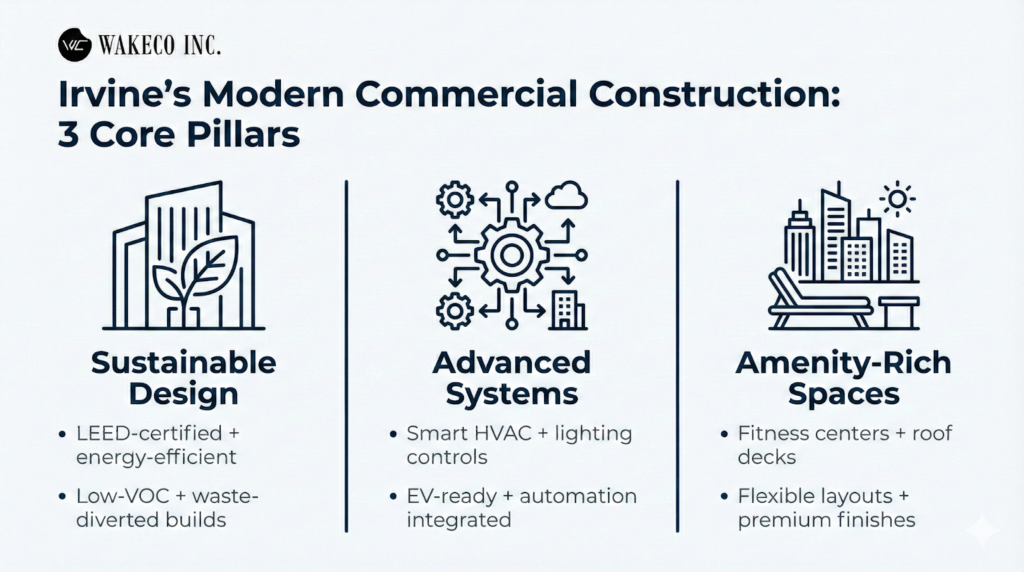
Modern commercial developments include amenities differentiating properties within competitive markets. Fitness centers require proper flooring supporting exercise equipment, adequate ventilation managing moisture, and shower facilities with commercial-grade finishes and fixtures. Locker rooms need proper drainage, exhaust systems, and durable materials withstanding constant moisture exposure.
Conference centers serve multi-tenant buildings providing meeting spaces unavailable within individual suites. Divisible rooms use operable partitions with proper acoustic ratings while audiovisual infrastructure supports presentations and video conferencing. Catering kitchens adjacent to conference spaces require commercial appliances, proper ventilation, and health department compliance.
Outdoor spaces including roof decks, landscaped plazas, and courtyards extend usable amenity areas. Proper waterproofing beneath occupied spaces prevents water intrusion while drainage systems manage rainfall. Furniture, shade structures, and landscaping create comfortable environments encouraging outdoor use during favorable weather.
Sustainable Building Practices
LEED Certification Requirements
Many Irvine commercial developments pursue LEED certification demonstrating environmental commitment and achieving operational cost savings. Certification levels—Certified, Silver, Gold, Platinum—require different point thresholds earned through sustainable site development, water efficiency, energy performance, materials selection, and indoor environmental quality.
Construction waste management diverts materials from landfills through recycling and reuse. Documentation tracks waste streams, diversion rates, and final disposal methods. Regional materials sourced within 500 miles reduce transportation impacts while recycled content materials contribute toward certification thresholds.
Indoor air quality during construction requires proper HVAC protection, low-VOC materials, and flush-out procedures before occupancy. Paints, adhesives, sealants, and flooring meet VOC limits while composite wood products use formaldehyde-free binders. These specifications protect occupant health while contributing toward LEED credits.
Energy Efficiency Standards
California’s Title 24 energy code establishes minimum performance standards while LEED and voluntary programs push beyond code minimums. High-efficiency HVAC systems, LED lighting with advanced controls, and building envelope performance all contribute to reduced energy consumption and operating costs.
Variable refrigerant flow systems provide efficient heating and cooling with independent zone control. Heat recovery captures energy from exhaust air preconditioning incoming ventilation air. Economizer cycles use outdoor air for cooling when conditions permit reducing mechanical cooling loads.
Lighting controls including occupancy sensors, daylight harvesting, and personal dimming reduce energy consumption while improving occupant comfort. Plug load management addresses equipment energy use through smart power strips and building automation integration monitoring and controlling non-critical loads.
Technology Infrastructure
Structured Cabling Systems
Modern commercial buildings require robust telecommunications infrastructure supporting data, voice, and audiovisual systems. Structured cabling uses Category 6A or fiber optic cables terminating at telecommunications rooms on each floor. Proper pathways including cable trays, conduits, and sleeves accommodate current needs with capacity for future expansion.
Telecommunications rooms require adequate space, power, cooling, and cable management supporting active equipment. Equipment racks, patch panels, and cable management systems organize connections while proper labeling facilitates moves, adds, and changes throughout the building lifecycle.
Horizontal cabling extends from telecommunications rooms to work areas with proper terminations at wall plates or furniture outlets. Testing and certification verify performance meeting specified standards. Documentation including cable schedules, room layouts, and as-built drawings supports ongoing facility management.
Building Automation Systems
Building automation systems integrate HVAC, lighting, access control, and other building systems enabling centralized monitoring and control. Web-based interfaces allow facility managers to adjust setpoints, monitor equipment performance, and receive alarms indicating system issues requiring attention.
Integration with tenant systems allows occupancy-based control adjusting building services based on actual space use. Unoccupied spaces reduce HVAC and lighting levels while occupied areas maintain comfort conditions. Scheduling accommodates varying business hours across different tenants.
Energy monitoring tracks consumption by system, floor, or tenant supporting operational optimization and cost allocation. Trend data reveals performance issues while analytics identify efficiency opportunities. Remote access enables facility management from off-site locations.
Site Development for Commercial Campuses
Master-Planned Business Parks
Irvine’s business parks follow master plans establishing development standards, architectural guidelines, and shared infrastructure. Multiple buildings share common parking areas, landscaping, and amenity spaces creating cohesive campus environments. Phased development allows incremental construction as market demand justifies additional buildings.
Shared infrastructure including utilities, storm drainage, and fire access serves multiple buildings through coordinated planning. Oversizing systems during initial phases accommodates future development without retrofits. Common area maintenance agreements establish responsibility for shared facilities and ongoing operations.
Parking Structures
Structured parking maximizes site utilization in areas with high land costs. Post-tensioned concrete construction provides economical spans while precast systems accelerate schedules. Proper drainage prevents water accumulation while traffic coatings protect concrete from vehicle wear and chemical exposure.
Lighting provides adequate illumination for safety and security using LED fixtures with proper distribution. Wayfinding signage directs circulation to exits and building entries while stair and elevator locations provide convenient pedestrian access. Security cameras monitor activity throughout structures.
Electric vehicle charging infrastructure increasingly becomes a standard amenity. Conduit and panel capacity accommodate current chargers with provisions for future expansion as EV adoption increases. Dedicated parking stalls near chargers provide convenient access.
Irvine’s Development Environment
Planning and Zoning
Irvine’s master-planned development follows specific plans governing land use, building height, setbacks, and architectural standards within different areas. Design review evaluates projects for consistency with established guidelines ensuring compatibility with surrounding development and maintaining community character.
Development agreements between property owners and the city establish specific terms including infrastructure obligations, phasing requirements, and public benefit contributions. These agreements provide certainty for developers while ensuring projects meet community objectives.
Building Standards and Codes
Irvine enforces California Building Code with local amendments addressing specific concerns. Plan review examines structural systems, fire protection, accessibility, and energy compliance verifying code adherence before permit issuance. Review timelines for commercial projects typically range 6-10 weeks depending on complexity.
Third-party plan review services expedite processing for projects meeting program criteria. Private plan review companies examine plans under city oversight accelerating timelines while maintaining thoroughness. Final city review verifies third-party work before permit issuance.
WakeCo’s Modern Commercial Development Expertise
Our Irvine experience encompasses Class A office buildings, corporate campus developments, and build-to-suit facilities for specific tenants. This work informs our understanding of sustainable building requirements, advanced systems integration, and finish quality modern commercial tenants expect.
We coordinate with specialized consultants including LEED professionals, commissioning agents, and technology designers ensuring projects meet certification goals and performance objectives. Our preconstruction services include constructability review, value engineering maintaining design intent, and detailed scheduling coordinating long-lead procurements.
Quality control throughout construction includes systematic inspections at critical milestones, submittal review verifying specification compliance, and testing verification for building systems. Commissioning processes ensure mechanical, electrical, and technology systems operate as designed before tenant occupancy.
Building Irvine’s Commercial Future
Construction for modern commercial developments in Irvine requires specialized expertise in sustainable building practices, advanced systems, and contemporary workplace standards. Energy performance, technology infrastructure, amenity quality, and finish sophistication all contribute to successful projects attracting quality tenants.
Ready to discuss your Irvine commercial development? Contact WakeCo for comprehensive construction services. We’ll review your requirements, explain our approach, and demonstrate how our modern commercial expertise delivers successful outcomes. Call today or request a consultation online. Let’s build the future of work.
Frequently Asked Questions
What makes modern commercial construction different from traditional office buildings?
Modern commercial developments emphasize sustainable design, advanced building systems, extensive amenities, flexible layouts, and technology infrastructure supporting contemporary workplace needs beyond basic code compliance.
How long does LEED certification add to project timelines?
LEED documentation runs parallel to construction without substantial timeline impacts. Design phase credits require early decisions while construction phase credits integrate with normal quality control. Certification review after substantial completion typically takes 2-4 months.
What technology infrastructure do modern offices require?
Modern offices need structured cabling systems, adequate telecommunications rooms, building automation integration, wireless network infrastructure, and capacity for future expansion supporting evolving technology needs.
How does WakeCo ensure sustainable building goals are met?
We coordinate with LEED consultants, implement construction waste management plans, verify low-VOC materials, track indoor air quality requirements, and document sustainable practices throughout construction supporting certification goals.
Why choose WakeCo for Irvine commercial construction?
We bring specialized modern commercial experience with Irvine knowledge navigating local planning requirements and established relationships with sustainable building consultants supporting LEED certification and advanced systems integration.