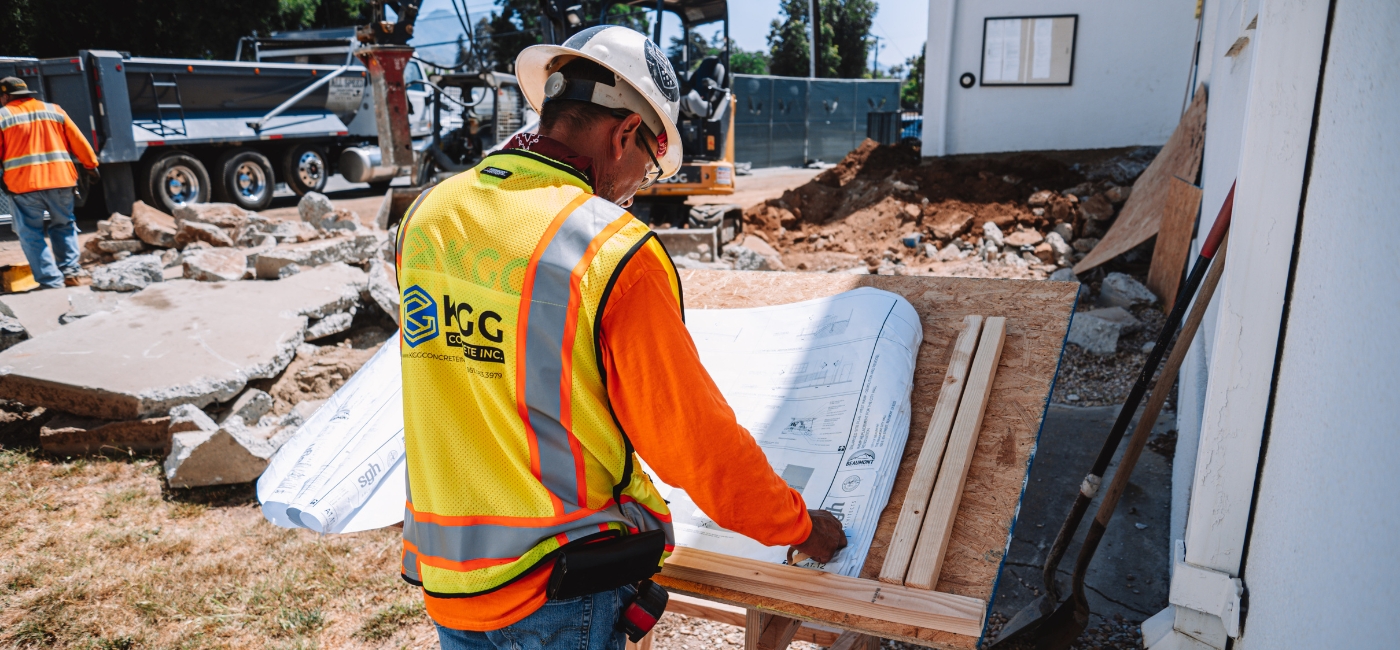
A general contractor in Pasadena coordinates construction across a city of 138,000 residents where historic preservation meets modern development demands. The city’s architectural heritage spans Craftsman bungalows, Spanish Colonial Revival estates, and mid-century commercial buildings, while new construction fills adaptive reuse opportunities and infill sites throughout neighborhoods from Old Pasadena to South Lake Avenue.
WakeCo delivers general contracting throughout Pasadena with expertise spanning residential additions and remodels, commercial tenant improvements, historic renovations, and new construction. Our approach emphasizes quality execution, transparent communication, and attention to detail that Pasadena’s diverse building stock requires.
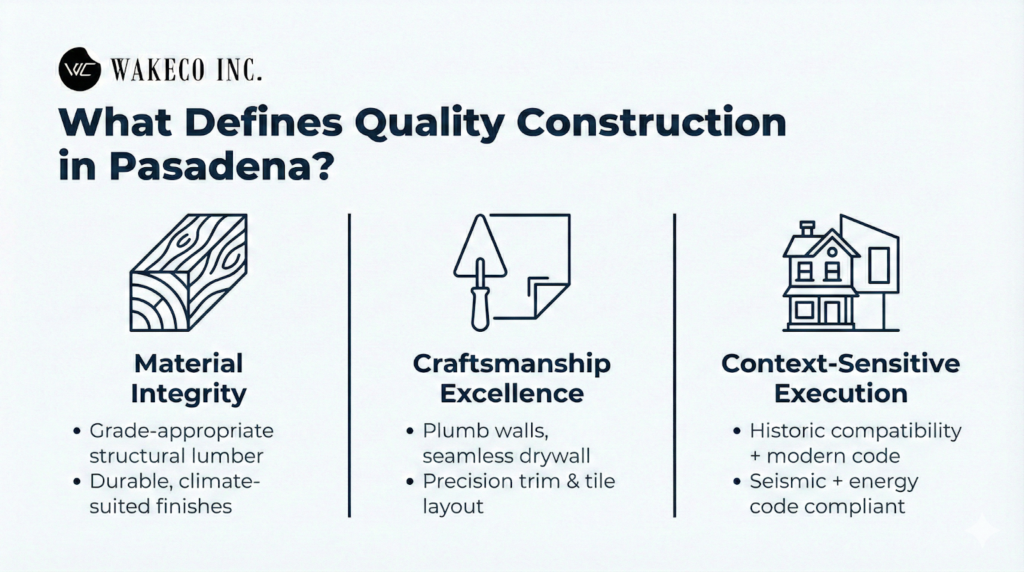
Understanding Quality in Construction
Material Selection Standards
Quality construction begins with appropriate material specifications. Structural lumber meets grade requirements for intended loads—No. 2 or better for framing, select structural for headers and beams. Plywood sheathing uses proper thickness and exposure ratings while fastener schedules follow engineered specifications preventing failures.
Finish materials balance aesthetics with durability. Hardwood flooring should be 3/4-inch solid or engineered products with substantial wear layers. Tile installations require proper substrate preparation and waterproofing in wet areas. Paint systems use quality primers and topcoats applied at proper film thickness.
Windows and doors affect both appearance and performance. Proper U-factors and Solar Heat Gain Coefficients optimize energy efficiency for Pasadena’s climate. Installation quality matters as much as product selection—proper flashing, air sealing, and weatherstripping all contribute to long-term performance preventing water intrusion and air leakage.
Craftsmanship and Execution
Quality shows in execution details. Framing members align properly creating plumb walls and level ceilings. Drywall joints finish smoothly without visible seams or fastener pops. Trim carpentry produces tight joints and consistent reveals. These fundamentals separate professional work from amateur efforts.
Tile installations require proper layout avoiding awkward cuts in visible locations. Grout joints maintain consistent width while corner details address inside and outside transitions cleanly. Cabinet installations achieve level, plumb alignment with proper reveals between doors and drawers.
Exterior work demands equal attention. Siding installations follow manufacturer specifications for fastening, overlap, and flashing. Roofing adheres to proper underlayment, starter courses, and valley details. Paint preparation includes proper surface cleaning, priming, and caulking before finish coats.
Residential Construction in Pasadena
Historic Home Renovations
Pasadena’s historic districts contain Craftsman bungalows, Spanish Colonial homes, and Period Revival architecture requiring thoughtful renovation approaches. Many properties face Historic Preservation Ordinance review for exterior modifications, influencing material selections and architectural details maintaining period character.
Foundation issues affect many historic homes. Raised wood floors may experience settling, rot, or termite damage requiring repairs or replacement. Proper moisture barriers, ventilation, and treated lumber prevent recurring problems. Concrete foundations crack or settle needing mudjacking, underpinning, or complete replacement.
Electrical and plumbing systems in older homes often need complete replacement. Knob-and-tube wiring, aluminum wiring, and undersized service panels all require updates meeting current code. Galvanized supply piping corrodes internally reducing water pressure while cast iron drain lines deteriorate. Modern replacements provide reliable service for decades.
Additions and Remodels
Room additions expand living space while respecting existing architecture. Foundation systems match or improve upon original construction while framing integrates with existing structures through proper connections. Rooflines tie into existing pitches and overhangs maintaining architectural cohesion.
Kitchen and bathroom remodels transform functional spaces. Kitchen layouts optimize work triangles between sink, range, and refrigerator while providing adequate counter space and storage. Proper lighting includes task lighting for work areas, ambient lighting for overall illumination, and accent lighting highlighting features.
Bathroom renovations address layout efficiency, storage, and finishes withstanding moisture. Proper waterproofing behind tile prevents structural damage while exhaust ventilation removes moisture preventing mold growth. Fixture selections balance style preferences with water efficiency and operational reliability.
New Construction Opportunities
Infill lots throughout Pasadena create new construction opportunities. Zoning regulations govern setbacks, height limits, lot coverage, and parking requirements shaping feasible designs. Design review in some areas evaluates compatibility with surrounding neighborhood character.
Energy efficiency standards under California Title 24 require proper insulation levels, efficient HVAC systems, low-E windows, and LED lighting. Solar photovoltaic systems increasingly become standard features reducing long-term operating costs. Proper building orientation, window placement, and shading optimize passive solar design.
Commercial Construction Applications
Tenant Improvements
Pasadena’s commercial districts along Colorado Boulevard, Lake Avenue, and in Old Pasadena require tenant improvements adapting spaces for specific businesses. Office construction coordinates HVAC zones, electrical capacity, and data infrastructure while retail spaces emphasize customer appeal through storefront design and interior finishes.
Restaurant tenant improvements involve commercial kitchen equipment coordination, health department approvals, grease trap installations, and Type I hood systems. Dining area design balances capacity optimization with comfortable circulation and ambiance supporting concept positioning.
Adaptive Reuse Projects
Historic commercial buildings throughout Pasadena undergo adaptive reuse converting obsolete uses into modern applications. Former industrial buildings become creative offices, old retail spaces transform into restaurants, and underutilized properties gain new life through thoughtful renovation.
Structural assessments determine existing capacity and required upgrades. Seismic retrofitting often becomes necessary bringing buildings to current standards. Accessibility improvements include ramps, elevators, and compliant restrooms meeting ADA requirements opening buildings to all users.
Navigating Pasadena’s Building Environment
Development and Permitting
Pasadena’s Planning and Community Development Department processes building permits following plan review for code compliance. Residential permits typically process in 3-6 weeks while commercial projects require 6-12 weeks depending on complexity. Historic preservation review adds time for properties in designated districts.
California’s strict energy codes, seismic requirements, and accessibility standards all apply. Plan reviewers examine structural calculations, mechanical system sizing, electrical load calculations, and plumbing fixture counts verifying code compliance before permit issuance.
Historic Preservation Considerations
Properties in historic districts or individually designated landmarks require Design Review Board approval for exterior modifications visible from public streets. The board evaluates compatibility with historic character considering materials, colors, architectural details, and overall design quality.
Secretary of Interior Standards guide renovation approaches emphasizing preservation of character-defining features. Original windows, decorative elements, and architectural details receive priority for retention and repair rather than replacement. New additions differentiate from historic fabric while remaining compatible.
Seismic and Structural Requirements
Pasadena sits near the Raymond Fault and experiences ground motion from the San Andreas system. Structures require proper seismic design through engineered systems resisting lateral loads. Older unreinforced masonry buildings need retrofitting preventing collapse during earthquakes.
Soft-story retrofitting addresses buildings with large openings at ground level like garages or commercial storefronts. Proper bracing, moment frames, or shear walls provide lateral resistance. Foundation bolting connects wood-frame structures to concrete foundations preventing sliding during seismic events.
WakeCo’s Quality-Focused Approach
Our Pasadena experience spans historic renovations respecting architectural heritage, residential additions integrating with existing structures, commercial tenant improvements, and new construction meeting stringent energy codes. This work informs our understanding of quality execution, proper material selection, and craftsmanship standards clients expect.
We maintain relationships with skilled trades demonstrating consistent quality and attention to detail. Our preconstruction planning includes thorough existing condition assessment, detailed scope development, and realistic scheduling accounting for permit review and material procurement. Communication throughout projects keeps clients informed while addressing questions and decisions promptly.
Quality control happens systematically through construction. We inspect work at logical milestones catching issues when easily corrected rather than discovering problems after completion. This approach prevents costly rework while delivering results meeting expectations.
Delivering Quality Results
A general contractor in Pasadena serves diverse construction needs from historic preservation to new development. Quality execution, appropriate material selection, skilled craftsmanship, and systematic project management all contribute to successful outcomes.
Ready to discuss your Pasadena project? Contact WakeCo for quality construction solutions. We’ll assess your property, provide honest evaluation of scope and approach, and deliver results meeting your expectations. Call today or request a consultation online. Let’s build something that lasts.
Frequently Asked Questions
How do I verify a contractor’s quality standards?
Review recent project photos, visit active jobsites, check references asking about quality and problem resolution, and verify licensing and insurance. Quality contractors demonstrate consistency across projects.
What permits does Pasadena require for renovation projects?
Building permits apply to structural changes, electrical and plumbing work, additions, and significant remodels. Historic properties may need Design Review Board approval. Some minor repairs don’t require permits.
How long do residential projects typically take in Pasadena?
Kitchen remodels require 6-10 weeks, bathroom renovations take 4-6 weeks, room additions need 3-5 months. Permit processing adds 3-6 weeks before construction starts.
What makes quality construction worth higher costs?
Quality construction uses appropriate materials lasting longer, employs skilled trades producing better results, prevents callbacks, maintains property value, and provides satisfaction through proper execution.
Why choose WakeCo for Pasadena construction?
We bring extensive Pasadena experience including historic renovations, residential additions, and commercial improvements. Our quality-focused approach emphasizes proper materials, skilled execution, and systematic management supporting reliable delivery.