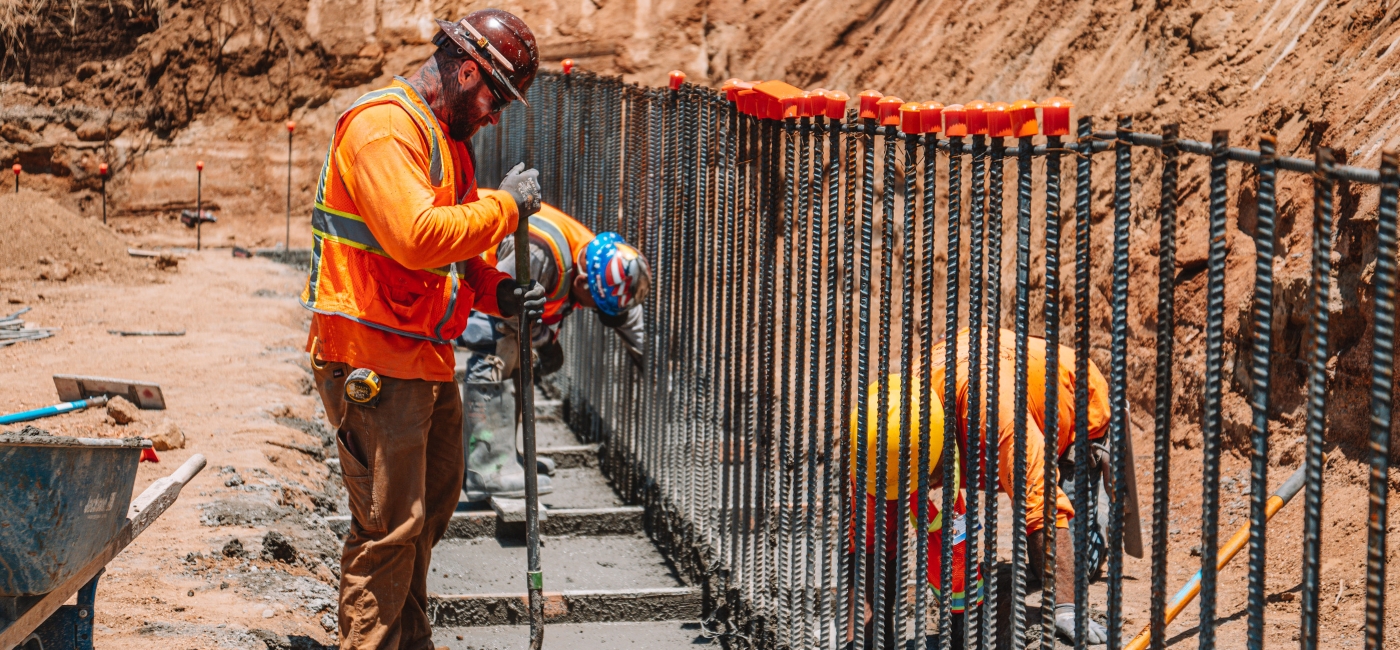
A general contractor in Santa Ana coordinates construction across Orange County’s second-largest city, where 310,000 residents occupy 27 square miles supporting diverse commercial sectors from downtown office towers to manufacturing facilities near John Wayne Airport. The city’s central Orange County location positions it as a regional hub, creating consistent demand for commercial construction and tenant improvement projects.
WakeCo delivers general contracting throughout Santa Ana with specialized expertise in commercial construction and tenant improvements. Our approach recognizes that commercial projects and tenant improvements demand compressed schedules, operational coordination in occupied buildings, and finish quality representing business brands.
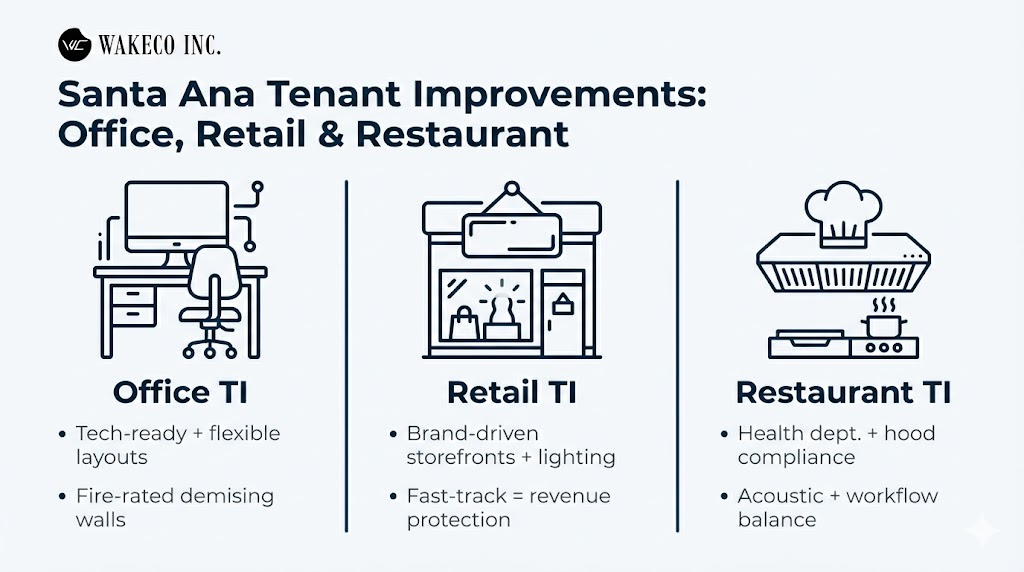
Commercial Tenant Improvement Fundamentals
Office Tenant Improvements
Office tenant improvements adapt shell spaces or existing offices for specific business operations. Space planning balances private offices, open workstations, conference rooms, and collaborative areas supporting organizational workflows and employee interactions. Demising walls between tenants require fire ratings extending from floor deck to roof or floor deck above maintaining proper separations.
HVAC modifications address new layouts and occupancy patterns. Ductwork rerouting serves relocated offices while VAV boxes provide zone control allowing temperature adjustment in different areas. Thermostats relocate to accessible locations while equipment capacities verify against revised load calculations accounting for occupancy, equipment, and lighting changes.
Electrical modifications support technology infrastructure and lighting requirements. Power distribution extends to workstations, server rooms, and equipment areas while circuits size appropriately for anticipated loads. Lighting design provides adequate illumination using LED fixtures with occupancy sensors and daylight harvesting meeting Title 24 energy requirements.
Data and telecommunications infrastructure enables modern business operations. Structured cabling terminates at telecommunications rooms with proper pathways to work areas. Cable management, testing, and certification verify performance while wireless access points supplement wired connections supporting mobile devices throughout tenant spaces.
Retail Tenant Improvements
Retail tenant improvements create customer appeal while supporting merchandise display and sales operations. Storefront modifications establish brand identity through signage, display windows, and entry design inviting customers inside. Materials withstand daily use while conveying quality appropriate to merchandise categories and price positioning.
Interior layouts guide customer circulation from entry through merchandise displays to checkout areas. Lighting systems highlight products using track lighting, recessed fixtures, and accent lighting creating inviting atmospheres. Fitting rooms require proper ventilation, lighting, and secure doors while stockrooms need adequate space for inventory storage and receiving.
Point-of-sale areas coordinate electrical circuits, data connections, and proper counter configurations. Security systems include cameras monitoring sales floors and stockrooms while alarm systems protect inventory after hours. Access control manages employee entry to stockrooms and back-of-house areas.
Restaurant Tenant Improvements
Restaurant tenant improvements coordinate the dining atmosphere with commercial kitchen functionality. Dining area construction emphasizes ambiance through lighting control, acoustic treatments managing noise, and finishes reflecting cuisine concepts. Seating layouts optimize capacity while maintaining comfortable spacing and clear paths to exits and restrooms.
Commercial kitchen construction requires a health department plan review before permit approval. Equipment layouts separate raw and cooked food preparation, provide adequate hand washing facilities, and position equipment with proper clearances. Three-compartment sinks meet dimensional requirements while floor drains slope properly for cleaning operations.
Type I exhaust hoods over cooking equipment require fire suppression systems and substantial exhaust capacity. Make-up air systems replace exhausted air preventing negative building pressure affecting HVAC performance. Grease interceptors sized for kitchen capacity prevent fats from entering sewer systems while meeting municipal requirements.
Commercial Construction Projects
Office Building Construction
Santa Ana’s commercial office market includes multi-tenant buildings serving professional services, financial institutions, healthcare administration, and technology companies. Office construction coordinates building core elements—elevators, restrooms, mechanical rooms, and stairwells—with tenant-ready spaces featuring base building systems.
Core efficiency maximizes leasable area while meeting code requirements. Elevator placement provides convenient access without excessive corridor lengths. Restroom locations serve multiple tenants on each floor while mechanical equipment occupies rooftop or designated floor areas minimizing impacts to leasable space.
Building systems support various tenant uses without premature obsolescence. HVAC systems provide adequate capacity for typical office loads with flexibility for higher-density uses. Electrical service sizes appropriately for base building demands plus tenant improvements. Plumbing risers serve restroom cores with provisions for tenant pantries and break rooms.
Retail and Mixed-Use Development
Mixed-use developments combine ground-floor retail with upper-floor offices or residential uses creating pedestrian-oriented environments. Retail spaces require separate entrances, adequate ceiling heights for signage and displays, and utility services supporting various business types from restaurants to personal services.
Structural systems accommodate different floor-to-floor heights—retail spaces benefit from 14-16 foot clear heights while offices function with 9-10 foot ceilings. This variation influences column placement, mechanical system routing, and construction sequencing coordinating multiple building systems.
Parking requirements vary by use—retail demands higher ratios than office or residential uses. Structured parking or subterranean garages maximize site utilization in areas with high land costs. Shared parking strategies reduce total stall counts when uses peak at different times.
Medical and Professional Buildings
Medical office buildings address specialized requirements beyond standard office construction. Exam rooms, procedure spaces, and diagnostic areas need proper dimensions, utility rough-ins, and finishes meeting healthcare standards. Enhanced HVAC systems provide adequate air changes while filtration levels address infection control where applicable.
Imaging suites require lead-lined walls protecting adjacent spaces from radiation. Proper installation includes overlapping lead sheet seams and verification through inspection. Equipment support addresses heavy loads from CT scanners, MRI machines, and X-ray equipment requiring reinforced floors or structural accommodations.
Medical gas systems serve facilities performing procedures requiring oxygen, medical air, nitrous oxide, or vacuum. Copper piping meeting NFPA 99 standards terminates at wall outlets with proper labeling and zone valve locations. System testing and certification verify integrity before clinical operations begin.
Managing Occupied Building Construction
Minimizing Operational Disruption
Tenant improvements in occupied buildings require coordination protecting adjacent tenants and building operations. Construction hours often shift to evenings, nights, or weekends when neighboring businesses close. Dust containment systems with negative air pressure prevent particulates from migrating through shared plenums or corridors.
Noise control addresses demolition, core drilling, and equipment installation generating substantial sound levels. Advanced notice to adjacent tenants allows operational adjustments while particularly disruptive work occurs during minimal occupancy periods. Temporary sound barriers provide additional protection where necessary.
Building system shutdowns require careful coordination. HVAC, electrical, or plumbing work affecting shared systems schedules during off-hours with proper notice to affected tenants. Emergency procedures establish protocols for unexpected service interruptions while temporary measures maintain essential services during planned outages.
Life Safety During Construction
Fire protection systems remain operational throughout construction. Sprinkler head relocations coordinate with ceiling modifications while maintaining required coverage. Hot work permits authorize welding, cutting, or torch operations with proper fire watch procedures and extinguisher placement.
Egress paths maintain required widths and unobstructed routes to exits. Temporary barriers cannot reduce corridor widths below code minimums while exit signage and emergency lighting remain functional. Fire department access to construction areas follows established procedures ensuring rapid response capabilities.
Santa Ana’s Building Environment
Development Services and Permitting
Santa Ana’s Planning and Building Agency processes building permits following plan review for code compliance. Commercial tenant improvements undergo expedited review when work remains within tenant spaces without affecting building systems or structure. More extensive projects require full plan review examining structural, mechanical, electrical, and plumbing systems.
Plan review timelines vary with project complexity. Simple tenant improvements may clear review in 2-3 weeks while new construction or major renovations require 6-10 weeks. Completeness checks verify submittal adequacy before routing to plan reviewers preventing delays from missing information.
Fire and Life Safety Requirements
Commercial buildings follow California Building Code and amendments establishing occupancy classifications, fire resistance requirements, and egress provisions. Sprinkler systems, fire alarms, emergency lighting, and exit signage all require coordinated design meeting fire marshal approval.
Occupancy loads determine required exit capacity based on use classifications and square footage. Business occupancies calculate differently than assembly uses like restaurants or retail spaces. Mixed occupancies in single buildings require proper fire separations and independent egress systems.
Seismic Considerations
Santa Ana’s location near multiple fault systems requires proper seismic design for commercial construction. Structural systems resist lateral loads through moment frames, braced frames, or shear walls depending on building height and configuration. Non-structural components including ceilings, partitions, and mechanical equipment require bracing preventing damage during seismic events.
Tenant improvements affecting structural elements or adding significant mass require structural engineer review. Partition layouts, equipment locations, and finish materials all contribute to seismic loads requiring evaluation against original building design capacities.
WakeCo’s Commercial and Tenant Improvement Expertise
Our Santa Ana experience encompasses office tenant improvements from small suite remodels to full-floor renovations, retail tenant improvements serving various merchandise categories, restaurant buildouts with full commercial kitchens, and medical office construction. This work informs our understanding of occupied building coordination, compressed schedules, and finish quality commercial tenants require.
We maintain relationships with subcontractors experienced in commercial systems, finishes, and operational coordination. Our preconstruction services include detailed existing condition assessment, landlord coordination addressing base building interfaces, permit strategy, and realistic scheduling accounting for review timelines and material procurement.
Communication throughout projects keeps landlords, tenants, and adjacent occupants informed of schedules and potential impacts. Quality control ensures work meets commercial standards while systematic punch list processes support on-time delivery allowing planned move-in dates.
Delivering Commercial Projects Successfully
A general contractor in Santa Ana serves diverse commercial sectors requiring specialized expertise in tenant improvements and commercial construction. Operational coordination, compressed schedules, finish quality, and regulatory compliance all depend on contractors understanding these specialized requirements.
Ready to discuss your Santa Ana commercial or tenant improvement project? Contact WakeCo for comprehensive general contracting services. We’ll review your requirements, explain our approach, and demonstrate how our commercial expertise delivers successful outcomes. Call today or request a consultation online. Let’s build your project right.
Frequently Asked Questions
What types of commercial projects does WakeCo handle in Santa Ana?
We construct office tenant improvements, retail tenant improvements, restaurant buildouts, medical offices, and commercial buildings with specialized expertise in occupied building coordination and compressed schedules.
How long do tenant improvements typically take?
Office tenant improvements complete in 6-12 weeks, retail tenant improvements require 6-10 weeks, and restaurant buildouts take 10-14 weeks. Permitting adds 2-4 weeks before construction begins.
Can tenant improvements proceed while adjacent spaces remain occupied?
Yes, through dust containment, noise control, off-hours scheduling, and coordination with building management. We maintain operational conditions for adjacent tenants while completing construction efficiently.
What makes tenant improvements different from ground-up construction?
Tenant improvements coordinate with existing building systems, maintain operations in adjacent spaces, work within landlord requirements, and follow compressed schedules minimizing business disruption and revenue loss.
Why choose WakeCo for Santa Ana commercial construction?
We bring specialized commercial and tenant improvement experience with Santa Ana knowledge navigating local permitting and established trade relationships supporting reliable execution meeting schedule commitments and quality standards.