Anaheim new construction operates across one of Orange County’s most active and regulatory-layered commercial markets. The city runs distinct zoning overlays, an active industrial pipeline, and a large-scale mixed-use redevelopment program that each impose specific planning and permitting conditions on new commercial projects. Understanding those conditions before design is finalized is what makes projects stay on schedule.
WakeCo provides construction management throughout Anaheim and Orange County across ground-up commercial construction, tenant improvements, office build-outs, and industrial facilities. Our preconstruction process addresses permit coordination, California code compliance, and project delivery before commitments are made. Contact us to discuss your project.
Anaheim’s Zoning Landscape and What It Means for New Construction
Anaheim’s commercial zoning is not uniform. The city administers several distinct overlay zones that impose requirements beyond the base Title 18 zoning code, and projects that fail to identify the applicable overlay at the start of planning encounter entitlement and permitting conditions they weren’t prepared for.
The Platinum Triangle Mixed Use Overlay Zone governs the 820-acre district surrounding Angel Stadium and the Honda Center. Development within the PTMU zone beyond 10,000 square feet requires an approved final site plan and a development agreement with the City of Anaheim before building permits are issued.
The Anaheim Resort Specific Plan governs the resort corridor near Disneyland, where land use and design standards are calibrated to the area’s tourism function and reviewed for consistency with resort-quality requirements.
Projects outside these overlays still operate under Anaheim’s full Title 18 zoning code, which governs setbacks, lot coverage, parking ratios, and conditional use permit requirements that vary by zone classification. Confirming the applicable zoning and overlay conditions before design begins prevents entitlement delays that add months to preconstruction timelines.
Anaheim’s Commercial Plan Check Process
The City of Anaheim Planning and Building Department administers commercial building permits under the 2025 California Building Standards Code with local amendments. Plan check for commercial projects runs 6 to 12 weeks depending on project type and submittal completeness, with new ground-up construction carrying the longest review timelines. Most commercial projects go through 2 to 3 correction cycles, and each cycle resets the review clock.
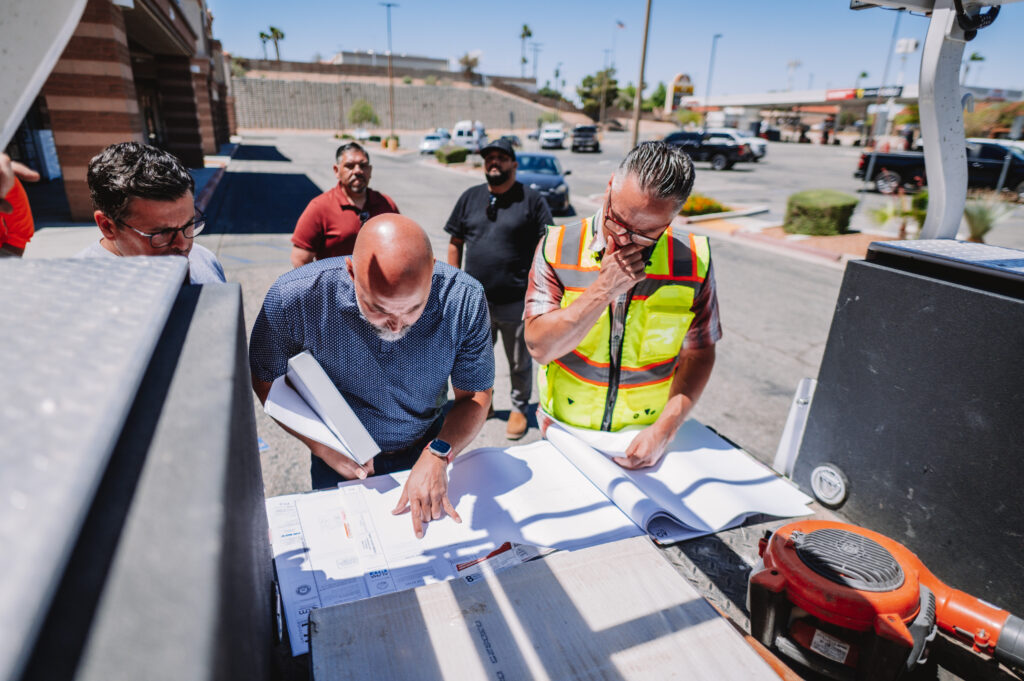
PTMU Overlay Zone projects carry additional design review requirements through the Planning Commission. Projects within the Anaheim Resort corridor are subject to the resort-specific plan’s design and use standards, which require a separate layer of city review before building permits are addressed. Coordinating those reviews with construction scheduling during preconstruction keeps them from becoming sequential delays.
Anaheim offers expedited plan review for qualifying projects. Whether a project qualifies depends on scope and submittal completeness at the time of application, and submittals with incomplete documentation do not qualify regardless of project type.
Anaheim’s Active Construction Market and Subcontractor Availability
Orange County’s industrial construction pipeline reached 2.1 million square feet underway in 2025, concentrated in Anaheim, Irvine, and Santa Ana. A 237,246-square-foot Class A warehouse in Anaheim delivered in July 2025, and Pacific Industrial’s projects at Stadium Landing represent additional active construction volume in the city’s industrial corridors.
The OCVibe development adds a separate layer of construction activity. The $4 billion, 100-acre mixed-use project surrounding the Honda Center has parking structures and roadwork underway, with additional residential and commercial phases in active planning and permitting. Trades committed to projects of that scale are not equally available for smaller commercial work in the same market.
Procurement planning during preconstruction identifies which subcontractors have capacity for a project’s schedule before that schedule is set. A construction manager with established subcontractor relationships in Anaheim has a practical advantage in a market where active construction volume keeps trade schedules consistently full.
Preconstruction Planning for Anaheim Ground-Up Projects
The decisions that most affect cost and schedule outcomes on Anaheim ground-up commercial projects are made before construction begins. Permit strategy, constructability review, and subcontractor procurement conducted during preconstruction address conditions that become expensive to correct once construction is underway.
Ground-up construction in Anaheim’s industrial corridors involves site conditions that require confirmed geotechnical findings before foundation design is finalized. Structural and foundation design developed without site-specific soil data produces field conditions that require redesign after commitments are made. WakeCo initiates geotechnical investigation during preconstruction on projects where soil conditions affect foundation design.
For projects within the Platinum Triangle or resort corridor, the development agreement and final site plan approval process runs on a timeline that must be coordinated with design, permit submittal, and construction start. Treating those processes as sequential rather than coordinated adds months to preconstruction that competent planning prevents.
Planning Your Anaheim Commercial Construction Project
The cost and schedule patterns that affect Anaheim commercial construction projects follow consistent sequences. Zoning overlay gaps, deferred geotechnical investigation, and late subcontractor procurement each produce construction-phase expenses that preconstruction planning addresses before commitments are made.
Business owners who engage a construction manager before site control or lease execution confirm project feasibility at the anticipated budget and schedule while those decisions are still open. Those who engage later absorb costs that earlier involvement would have prevented.
WakeCo brings the construction management experience and Anaheim market knowledge these projects require. Contact us to discuss your project and how our preconstruction process keeps your timeline and budget on track.
Frequently Asked Questions
How long does a commercial plan check take in Anaheim?
Commercial plan check in Anaheim runs 6 to 12 weeks depending on project type and submittal completeness, with new ground-up construction at the longer end of that range. Most commercial projects go through 2 to 3 correction cycles, and each cycle adds another review period. Expedited review is available for qualifying projects, but incomplete submittals do not qualify regardless of the expedited designation.
What is the Platinum Triangle Mixed Use Overlay Zone and how does it affect new construction?
The PTMU Overlay Zone governs Anaheim’s 820-acre mixed-use district surrounding Angel Stadium and the Honda Center. Development beyond 10,000 square feet within the zone requires an approved final site plan and a development agreement with the City of Anaheim before building permits are issued. Projects subject to these requirements need to account for the Planning Commission approval process in their preconstruction timeline.
How does Anaheim’s active construction market affect commercial project scheduling?
Orange County’s industrial construction pipeline reached 2.1 million square feet in 2025, with Anaheim among the most active submarkets. The OCVibe development adds additional construction volume near the Honda Center. Trades committed to large projects have reduced availability for smaller commercial work, and subcontractor procurement during preconstruction is the most effective tool for securing trade capacity before the construction schedule requires it.
When should a business owner engage a construction manager for an Anaheim project?
Before site control or lease execution when possible, and no later than immediately after. Preconstruction evaluation confirms whether a site can support the intended use at the anticipated budget and schedule. Zoning overlay requirements, permit timelines, geotechnical conditions, and subcontractor availability in Anaheim’s active market are each better addressed during preconstruction than after construction has started.
What site conditions affect ground-up construction in Anaheim?
Anaheim’s industrial corridors include sites with soil conditions that require confirmed geotechnical findings before foundation design is finalized. Structural and foundation design developed without site-specific data produces field conditions that require redesign after commitments are made. Initiating geotechnical investigation during preconstruction is standard practice on ground-up projects where soil conditions affect foundation design.