San Diego’s commercial construction market runs across distinct jurisdictions with different permitting requirements, fee structures, and review timelines. A project in the City of San Diego operates under different regulatory conditions than one elsewhere in the county. Construction management services that don’t account for those differences from the start of preconstruction produce problems that competent planning prevents.
WakeCo provides construction management services throughout San Diego County across ground-up commercial construction, tenant improvements, office build-outs, and industrial facilities. Our preconstruction process addresses permit coordination, California code compliance, and project delivery before commitments are made. Contact us to discuss your project.
What Construction Management Services Actually Cover
Construction management is not a single service. The scope varies by project type, delivery model, and the point at which a construction manager is engaged. Understanding what is and isn’t included in a construction management agreement determines whether the owner gets the oversight the project requires.
At the core, construction management covers schedule development, subcontractor coordination, budget tracking, and quality control during construction. On more complex projects it extends into preconstruction, covering permit coordination, constructability review, and procurement planning. Projects where construction management delivers the most value treat preconstruction and construction phase services as a continuous process.
Construction Management Fee Structures in San Diego
Construction management fees in San Diego follow three structures: a fixed fee, a percentage of construction cost, or a guaranteed maximum price arrangement where the construction manager holds subcontractor contracts directly. Each carries different risk allocation between owner and contractor.
Fixed fee arrangements work when project scope is well defined before construction begins. Commercial office and mixed-use projects typically fall in the 3% to 5% range, while smaller or more complex projects push above that. Guaranteed maximum price arrangements shift financial risk to the construction manager and require complete construction documents before pricing is reliable.
Owners who engage a construction manager during preconstruction have more flexibility in structuring the fee arrangement. Those who engage after design is complete typically work with whatever structure the contractor proposes at that stage.
Delivery Models for San Diego Commercial Construction
The delivery model selected for a San Diego commercial construction project determines who holds subcontractor contracts, who carries financial risk, and how much control the owner retains over construction decisions. Choosing the wrong model for a project’s complexity and the owner’s internal capacity is a consistent source of cost and schedule problems that preconstruction planning addresses before commitments are made.
Construction Management At-Risk. The construction manager holds subcontractor contracts and carries financial exposure if costs exceed the guaranteed maximum price. This model suits owners who want a single point of accountability and are willing to transfer cost risk in exchange for schedule certainty.
Agency Construction Management. The owner holds subcontractor contracts directly and the construction manager acts as the owner’s representative without taking on cost risk. This model suits owners with in-house project management capacity who want construction expertise without transferring contract control.
Design-Build. Design and construction responsibility consolidate under a single entity, compressing schedule by allowing construction to begin before design is complete. It requires a well-defined program before engagement to avoid scope drift that adds cost after the contract is executed.
Integrated Project Delivery. The owner, designer, and construction manager enter a single contractual structure with shared risk and reward. It is most appropriate for large, complex projects where early collaboration materially affects outcomes. For most commercial projects in San Diego, the complexity required to justify IPD’s contract structure is not present.
Permitting Across San Diego County Jurisdictions
The City of San Diego Development Services Department administers commercial permits under the 2022 California Building Standards Code with local amendments. Full plan check for commercial projects runs 6 to 10 weeks. Jurisdictions including Chula Vista, Escondido, and El Cajon each administer permits independently under their own local amendments and review timelines.
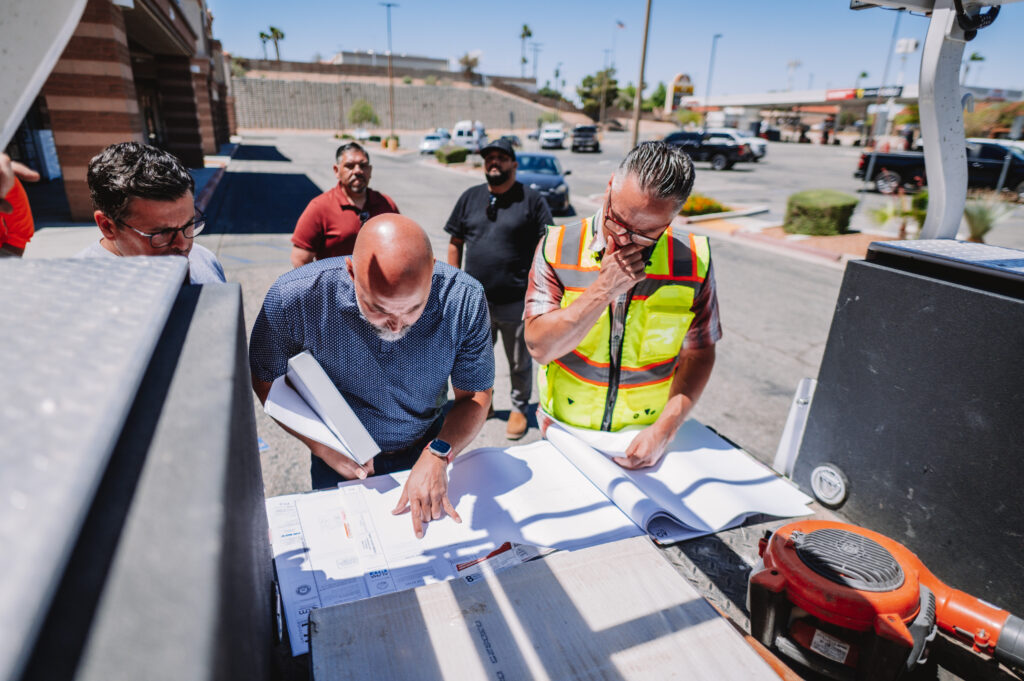
Projects that span multiple permit jurisdictions, or that incorrectly assume uniform requirements across the county, encounter submittal corrections and review delays that extend preconstruction well beyond initial projections. Identifying the correct jurisdiction and its specific requirements at the start of preconstruction is a basic condition of keeping permit timelines on track.
The California Coastal Commission holds permitting authority over development within the coastal zone, which covers significant commercial areas in San Diego including Mission Bay, Point Loma, and the downtown waterfront. Coastal development permits run on timelines independent of city building permits and require separate submittal preparation. WakeCo manages coastal and municipal permits simultaneously on projects where both apply.
Preconstruction Services and Their Effect on Project Outcomes
The decisions that most affect San Diego commercial construction outcomes are made before construction begins. Permit strategy, subcontractor procurement, and constructability review conducted during preconstruction address conditions that become expensive to correct once construction is underway.
San Diego’s coastal location introduces soil conditions including expansive clays and liquefiable soils in areas near the bay and river valleys. Structural and foundation design developed without confirmed geotechnical findings from the project site produces field conditions that require redesign after commitments are made. WakeCo initiates geotechnical investigation during preconstruction on projects where soil conditions affect foundation design.
Subcontractor availability in San Diego’s active construction market affects both cost and schedule. Trades committed to large projects in Mission Valley, Downtown, or the Sorrento Valley corridor are less available for smaller commercial work. Procurement planning during preconstruction identifies subcontractor capacity constraints before they become schedule problems during construction.
Planning Your San Diego Commercial Construction Project
The patterns that produce cost and schedule overruns on San Diego commercial construction projects are consistent. Permit coordination gaps, deferred geotechnical investigation, and late subcontractor procurement each follow sequences that preconstruction planning interrupts before they become construction phase expenses.
Business owners who engage a construction manager before site control or lease execution confirm project feasibility at the anticipated budget and schedule before commitments are made. Those who engage later absorb costs that earlier involvement would have prevented.
WakeCo brings the construction management experience and San Diego market knowledge these projects require. Contact us to discuss your project and how our preconstruction process keeps your timeline and budget on track.
Frequently Asked Questions
What do construction management services in San Diego typically cost?
Construction management fees in San Diego generally range from 5% to 15% of total construction cost for percentage-based arrangements, depending on project complexity and the scope of preconstruction and construction phase services included. Fixed fee and guaranteed maximum price arrangements are also common. The fee structure that fits a project depends on how much scope definition exists at the time of engagement.
How does the City of San Diego’s permitting process compare to other jurisdictions in the county?
The City of San Diego Development Services Department administers commercial permits independently under the 2022 California Building Standards Code with local amendments. Full plan check runs 6 to 10 weeks. Other jurisdictions in the county, including Chula Vista, Escondido, and El Cajon, each operate their own permitting processes with different review timelines and local requirements.
What is the difference between construction management at-risk and agency construction management?
In a construction management at-risk arrangement, the construction manager holds subcontractor contracts and carries financial exposure if costs exceed the guaranteed maximum price. In an agency arrangement, the owner holds subcontractor contracts and the construction manager acts as the owner’s representative without taking on cost risk. The right model depends on the owner’s requirements and demands.
When should a business owner engage a construction manager for a San Diego project?
Before site control or lease execution when possible, and no later than immediately after. Preconstruction evaluation confirms whether a project is feasible at the anticipated budget and schedule before commitments are made. Soil conditions, permit complexity, and subcontractor availability in San Diego’s active market are each better addressed during preconstruction than after construction has started.
Does the California Coastal Commission affect commercial construction in San Diego?
Yes. Development within San Diego’s coastal zone requires a coastal development permit from the California Coastal Commission in addition to local building permits. The coastal zone covers commercial areas including Mission Bay, Point Loma, and the downtown waterfront. Coastal development permits run on timelines independent of city permits and require separate submittal preparation.