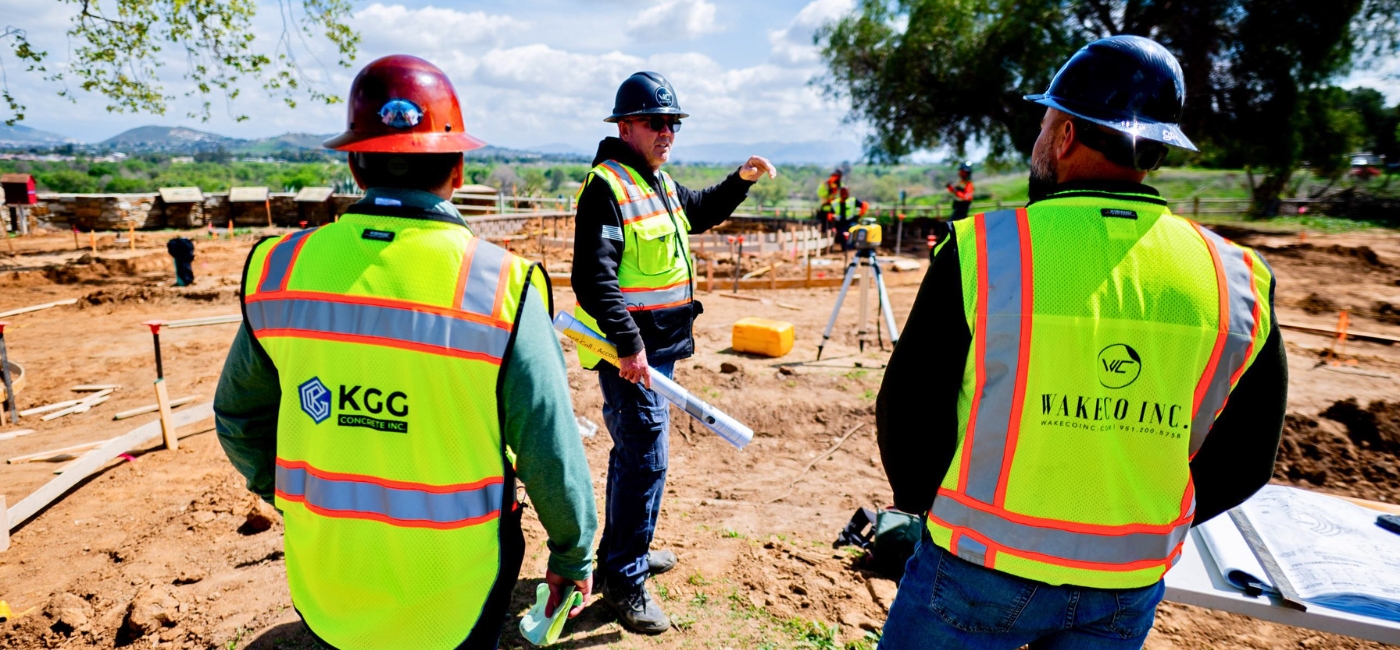
Ground up construction in Southern California is a longer and more layered process than in most U.S. markets. Site due diligence, entitlement, CEQA review, permitting under the 2025 California Building Standards Code, and construction each carry region-specific conditions that affect cost and schedule in ways that aren’t immediately visible. Owners who understand the full sequence from site selection to certificate of occupancy make better decisions at every step.
WakeCo provides construction management and general contracting for ground up commercial construction across Southern California. Our preconstruction process addresses entitlement, permit strategy, and site conditions before commitments are made. Contact us to discuss your project.
Site Selection and Pre-Acquisition Due Diligence
Site selection in Southern California involves more than finding available land at an acceptable price. Zoning, overlay zones, utility capacity, and proximity to sensitive receptors each affect whether a site can support a project’s intended use and at what cost.
Pre-acquisition due diligence for commercial ground up projects typically includes a Phase I Environmental Site Assessment under ASTM E1527-21 standards. The Phase I reviews historical records, conducts a site reconnaissance, and identifies Recognized Environmental Conditions indicating possible contamination.
Southern California’s industrial history means properties in Los Angeles, the Inland Empire, and Orange County frequently surface RECs tied to prior dry cleaner operations, auto repair facilities, gas stations, and manufacturing uses.
If the Phase I identifies conditions requiring further investigation, a Phase II ESA follows with soil and groundwater sampling. Contamination discovered after site control is established becomes the buyer’s liability. Identifying it before closing keeps it a negotiating variable.
Entitlement and CEQA
Entitlement is the legal process of securing government approval to develop a property for a specific use. Timelines vary significantly by jurisdiction, project type, and whether the project triggers discretionary review under CEQA. Projects that comply with existing zoning and don’t require discretionary approvals are statutorily exempt from CEQA. Projects requiring a conditional use permit, variance, or general plan amendment are subject to CEQA review.
CEQA review follows a tiered process. An Initial Study determines whether significant environmental impacts exist. If impacts can be mitigated, a Mitigated Negative Declaration is prepared. Projects with significant unavoidable impacts require a full Environmental Impact Report, which can take 18 months or more and carry litigation risk from any party that raised concerns during public comment.
AB 130, signed in 2025, introduced a CEQA exemption for qualifying infill residential projects on sites of 20 acres or less. Voit Real Estate Services estimates the reform cuts entitlement timelines by 12 to 18 months for eligible projects. Commercial and industrial ground up development generally does not qualify, and the infill site maps required for eligibility aren’t scheduled for publication until July 1, 2026.
Permitting Under the 2025 Code
Every commercial permit application submitted on or after January 1, 2026 must comply with the 2025 California Building Standards Code. Southern California’s cities each adopt the state code with local amendments. Los Angeles, Anaheim, San Diego, and Long Beach administer permits independently with distinct portals, fee schedules, and plan check timelines.
Plan check for ground up commercial construction runs 6 to 12 weeks in most Southern California cities, with correction cycles resetting the clock at each resubmittal. The 2025 cycle also lowered the CALGreen embodied carbon compliance threshold from 100,000 square feet to 50,000 square feet for nonresidential projects. Ground up commercial builds at or above that size must now document one of three embodied carbon pathways before permits are issued.
Geotechnical Conditions and Foundation Design
Southern California’s geology introduces site-specific foundation conditions that vary by submarket. Expansive soils, liquefiable fill, hillside grading requirements, and fault zone setbacks each affect structural engineering and construction cost in ways that can’t be determined without investigation.
The Alquist-Priolo Earthquake Fault Zone Act prohibits habitable structures within 50 feet of active fault traces and requires site-specific geological investigation on properties within mapped fault zones. Seismic design categories D, E, and F apply across most of the region, requiring foundation systems engineered to site-specific ground motion parameters.
Geotechnical findings must be confirmed before foundation design is finalized. Structural design developed without site-specific data produces field conditions that require redesign after commitments are made. WakeCo initiates geotechnical investigation during preconstruction on ground up projects where soil conditions affect foundation design.
From Permits to Certificate of Occupancy
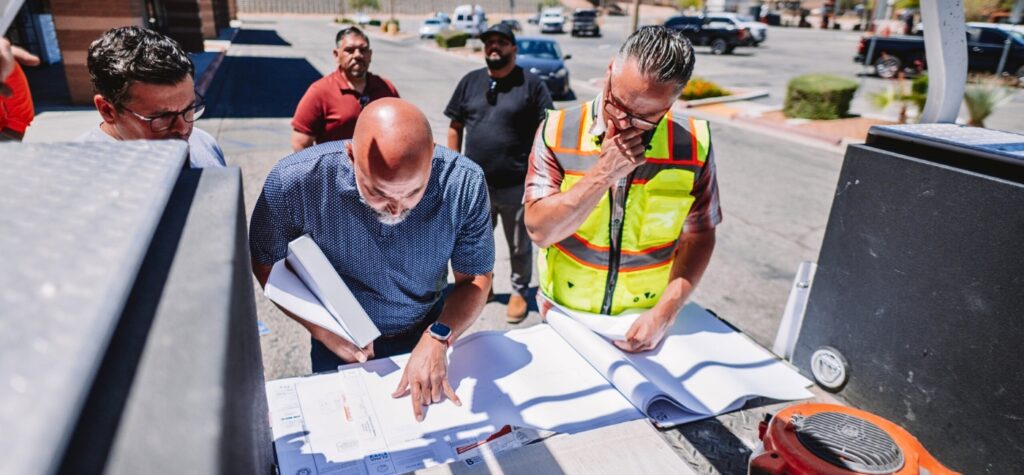
Once permits are issued, construction follows a defined inspection sequence tied to foundation, framing, rough mechanical and electrical, insulation, drywall, and final. Each inspection must receive sign-off before the next phase can proceed. Missed inspections require rework that no schedule buffer fully absorbs.
HVAC systems require full commissioning, fire alarm and sprinkler systems require separate testing by certified technicians, and electrical systems require utility coordination for permanent service connection. Southern California’s utilities, including LADWP, SCE, and SDG&E, each run their own permanent service application processes on timelines separate from the building permit.
A Certificate of Occupancy in California is issued upon final approval of all inspections under the building permit and associated trade permits. Title 24 compliance also requires a Certificate of Verification from a certified HERS Rater confirming that energy systems perform as designed. Operating a commercial building without a valid CO can result in fines of up to $1,000 per day in some jurisdictions, invalidate property insurance, and prevent business license issuance.
Planning Your Ground Up Project
The decisions that drive cost and schedule outcomes on a Southern California ground up project are concentrated before construction begins. Site due diligence, entitlement strategy, CEQA risk assessment, permit preparation, and geotechnical investigation each address conditions that become more expensive the later they’re resolved.
Owners who engage a construction manager before site control confirm project feasibility at the anticipated budget and schedule while those decisions are still open. Those who engage after absorb costs that earlier involvement would have prevented.
WakeCo brings the construction management experience and Southern California market knowledge these projects require. Contact us to discuss your project and how our preconstruction process addresses the conditions that drive outcomes from site selection to certificate of occupancy.
Frequently Asked Questions
What is included in pre-acquisition due diligence for a Southern California commercial site?
Pre-acquisition due diligence for a Southern California commercial site starts with a Phase I Environmental Site Assessment under ASTM E1527-21 standards. The Phase I identifies Recognized Environmental Conditions through records review, site reconnaissance, and interviews. Southern California’s industrial history makes RECs common across many submarkets, particularly on sites with prior manufacturing, gas station, or dry cleaner operations.
How long does entitlement take for a ground up commercial project in Southern California?
Entitlement timelines range from a few months for by-right projects exempt from CEQA to two years or more for projects requiring a full Environmental Impact Report. Projects subject to CEQA litigation risk can extend further. AB 130’s CEQA exemption applies to qualifying infill residential projects and does not generally benefit commercial or industrial ground up development.
What did the 2025 California Building Standards Code change for ground up construction?
The 2025 code took effect January 1, 2026, and applies to every commercial permit application submitted on or after that date. One notable change is the CALGreen embodied carbon threshold, which dropped from 100,000 to 50,000 square feet for nonresidential projects. Ground up commercial builds at or above that size must now document one of three embodied carbon compliance pathways before permits are issued.
How do Southern California’s seismic conditions affect ground up construction?
Southern California’s seismic design categories D, E, and F require foundation systems engineered to site-specific ground motion parameters. The Alquist-Priolo Earthquake Fault Zone Act prohibits habitable structures within 50 feet of active fault traces and requires geological investigation on properties within mapped fault zones. Geotechnical findings from soil borings and laboratory testing must be confirmed before foundation design is finalized.
What is required to obtain a Certificate of Occupancy in California?
A Certificate of Occupancy is issued upon final approval of all inspections under the building permit and associated trade permits, including electrical, plumbing, mechanical, and fire safety. Title 24 compliance requires a Certificate of Verification from a certified HERS Rater confirming energy systems perform as designed. Operating without a valid CO can result in daily fines up to $1,000 in some jurisdictions and invalidate property insurance.