Taking on a commercial lease commits a business to a space before construction confirms whether that space will actually support how the business operates. The build out process — from lease negotiation through occupancy — determines whether the finished environment serves the company’s needs or requires expensive corrections after move-in.
Commercial tenants who approach build out planning with the same rigor they apply to lease negotiations consistently achieve better outcomes than those who treat construction as a landlord problem.
WakeCo delivers office space build outs throughout Southern California with experience across corporate, medical, and professional service environments. Our approach addresses the planning, coordination, and construction execution that commercial tenants require to occupy functional spaces on schedule and within budget.
Understanding Your Lease Before Planning Begins
Tenant Improvement Allowances and Their Limits
Tenant improvement allowances define what landlords will fund toward build out construction, but the gap between allowance scope and actual project requirements frequently surprises tenants who don’t examine lease language carefully before design begins. Allowances typically cover standard construction — partitioning, ceiling systems, base electrical, and standard finishes.
Understanding allowance limits before design decisions are made prevents the budget surprises that force scope reductions mid-construction. WakeCo reviews tenant improvement exhibit language during preconstruction, identifying where allowance coverage ends and tenant responsibility begins before commitments are made that the budget cannot support.
Restoration Obligations and Construction Constraints
Lease language governing restoration obligations affects construction decisions in ways tenants rarely anticipate during negotiation. Above-standard improvements — raised flooring, specialty ceiling systems, custom millwork — may require removal at lease end, adding future costs that affect whether the investment checks out. Some landlords restrict modifications to base building systems entirely, constraining design decisions that tenants assume are within their rights.
Identifying these constraints before design is finalized costs nothing. Discovering them after construction is complete creates either expensive removal obligations or lease disputes that damage landlord relationships tenants need for future renewals and expansions.
Space Planning and Design
Matching Layout to How the Business Actually Works
Office layout decisions made on aesthetic grounds rather than operational ones produce spaces that look appropriate at occupancy but create friction in daily use. Conference room quantities that don’t match actual meeting patterns, private office allocations inconsistent with how teams collaborate, and circulation paths that interrupt workflow all reflect planning that prioritized appearance over function.
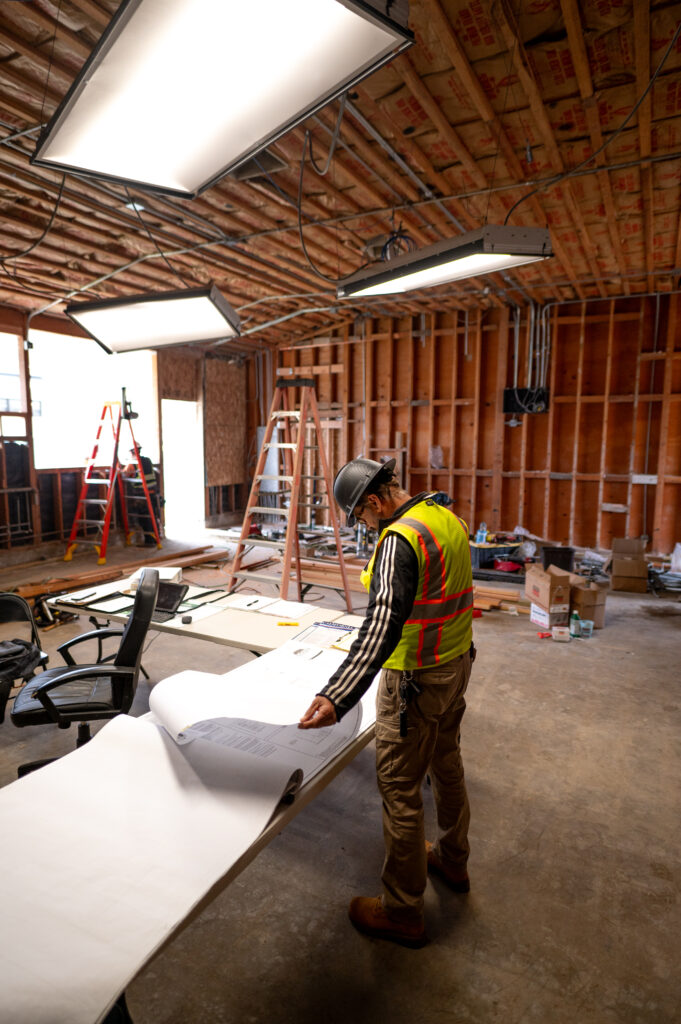
Effective space planning starts with how the business actually operates — headcount projections, collaboration patterns, client interaction requirements, and technology dependencies. WakeCo coordinates with tenants during design to confirm that construction documents reflect operational requirements rather than generic office assumptions that produce spaces nobody actually wants to work in.
Systems Planning for Current and Future Requirements
Mechanical, electrical, and technology infrastructure decisions made during design determine what the space can support for the duration of the lease. Electrical capacity that adequately serves current headcount but leaves no room for growth forces expensive panel upgrades when the business expands.
Data infrastructure that meets today’s requirements but lacks conduit capacity for future cabling creates retrofit costs that tenant improvement allowances won’t cover on a second build out.
Planning for realistic growth during initial design costs marginally more upfront and avoids the infrastructure limitations that restrict business decisions years into a lease term. The conversation is worth having before construction documents are finalized — it cannot be had affordably after walls close.
Technology Infrastructure Coordination
Structured cabling pathways, wireless access point locations, server room power and cooling requirements, and audiovisual systems must be coordinated with electrical and framing before rough-in work begins. Technology decisions deferred until after construction is underway consistently produce either compromised installations or expensive retrofits that reopen completed work.
WakeCo coordinates low-voltage and technology requirements with electrical contractors during design, confirming conduit routing, power provisions, and cooling capacity before walls close. Operators who treat technology infrastructure as a post-construction problem discover that the space they built doesn’t actually support the work environment they needed.
Construction Execution
Landlord Coordination and Permit Management
Office build outs in Southern California require landlord approval of construction documents and municipal building permits before work begins. These processes run independently and must be managed simultaneously — treating them sequentially adds weeks to preconstruction timelines that compress construction schedules and push occupancy past lease commencement dates tenants have already planned around.
WakeCo structures submittals to address both processes efficiently, identifying jurisdiction-specific requirements before filing and coordinating landlord review against permit timelines. Preconstruction managed as an integrated process rather than a sequence of individual steps consistently produces faster paths to construction start.
Trade Sequencing and Superintendent Oversight
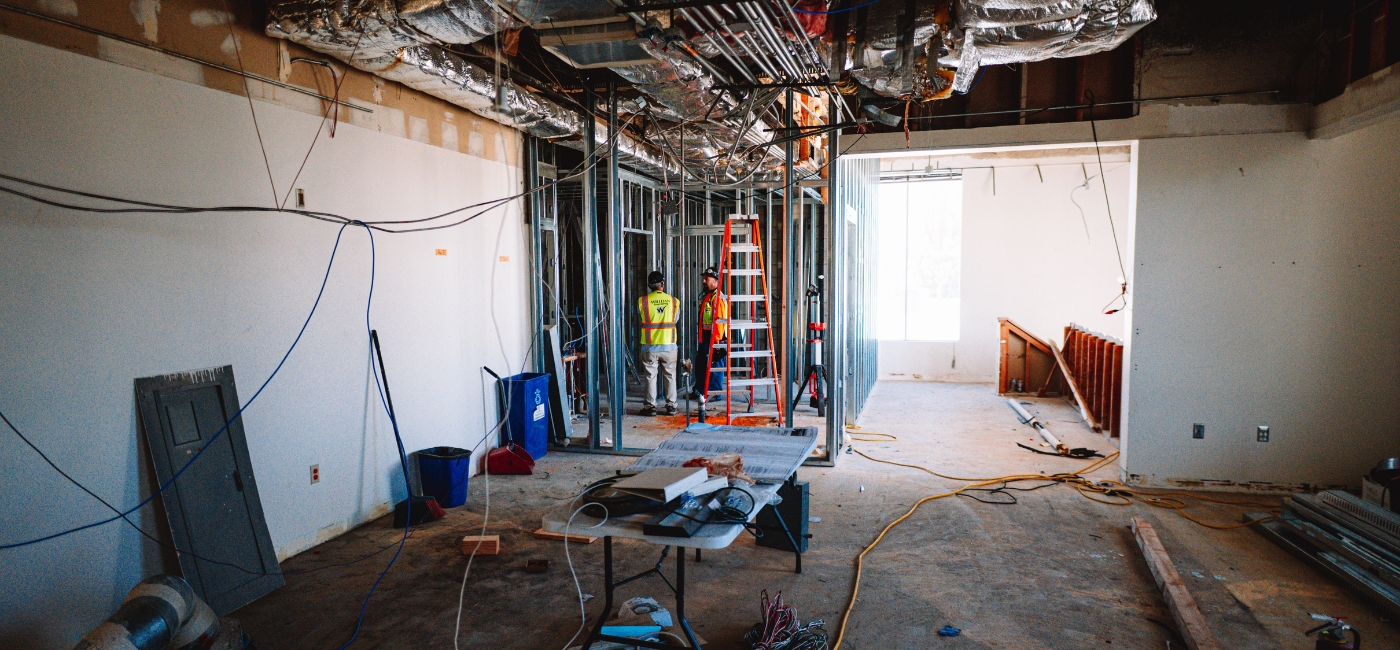
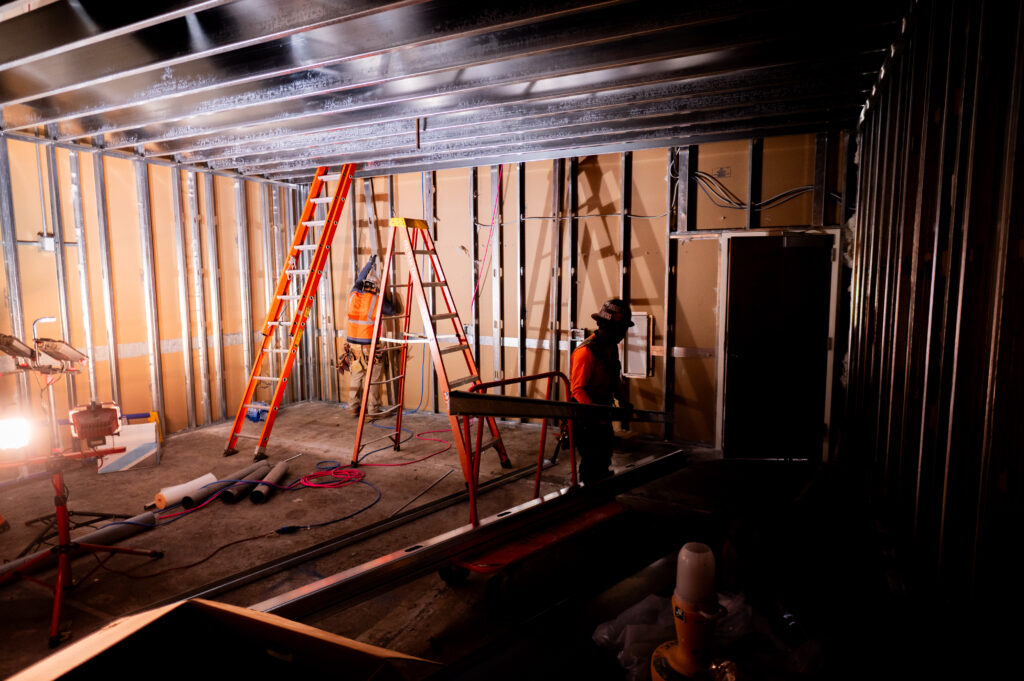
Office build out construction follows a defined sequence that experienced superintendents manage actively and inexperienced ones manage reactively. Demolition, rough framing, mechanical and electrical rough-in, inspections, insulation, drywall, finish work, flooring, and final finishes each depend on the preceding phase being complete and correct. Trades arriving out of sequence create conflicts that cost time and money to resolve.
WakeCo assigns superintendents who coordinate daily trade activity against project schedules, identifying sequencing conflicts before they affect completion dates. The difference between a superintendent who prevents delays and one who reports them shows up in opening dates and change order totals.
Occupied Building Protocols
Most commercial office build outs occur within buildings that remain operational throughout construction. Noise restrictions, dust containment requirements, elevator scheduling, and after-hours work mandates impose constraints affecting construction sequencing and cost. Contractors who treat these as obstacles to manage reactively create property management conflicts that follow tenants beyond the build out itself.
Building constraints incorporated into subcontractor scope and construction schedules from project outset produce projects that complete without the friction that damages landlord relationships commercial tenants depend on for renewals, expansions, and future lease negotiations.
Inspections and Project Closeout
Rough-in inspections for mechanical, electrical, and plumbing systems must pass before walls close. Failed inspections require reopening completed work — among the more expensive and avoidable problems in commercial interior construction. Final inspections across all trades must clear before certificate of occupancy issuance authorizes tenant occupancy.
WakeCo verifies rough-in work against code requirements before scheduling inspections and manages final inspection sequencing to prevent last-minute failures. Punch list completion before occupancy — rather than after move-in — delivers spaces that function as intended from the first day of operations rather than requiring tenants to manage contractor callbacks that disrupt business.
Building the Right Foundation for Your Office Space Build Out
Commercial tenants who invest in preconstruction planning — lease review, operationally grounded space planning, and permit coordination managed before construction begins — occupy functional spaces on schedule with budgets intact. Those who defer planning until construction is underway pay for that decision through change orders, schedule extensions, and spaces that require correction after move-in when correction is most disruptive and most expensive.
WakeCo brings the planning discipline and construction experience that office space build outs require throughout Southern California. Contact us to discuss your project requirements and learn how our approach delivers spaces ready for occupancy on schedule and within budget.
Frequently Asked Questions
How does an office space build out differ from a standard tenant improvement?
The terms are largely interchangeable, but office space build outs typically imply a more comprehensive scope — full interior construction from shell or prior-tenant condition rather than incremental improvements to an existing configuration. The distinction matters more for budget planning and timeline expectations than for construction approach or contractor selection.
What should commercial tenants negotiate before signing a lease?
Tenant improvement allowance amount and scope, landlord approval timelines for construction documents, permitted and restricted modifications, restoration obligations at lease end, and access rights for preconstruction space evaluation. Negotiating these provisions before execution protects build out budgets and construction timelines more effectively than addressing them after signing.
What causes office build out budgets to exceed initial estimates?
Incomplete scope definitions that omit systems coordination, technology infrastructure, or specialty requirements account for most overruns. Change orders driven by design decisions made after construction begins compound the problem. Base building conditions discovered during construction that preconstruction investigation would have identified represent a third category that thorough space evaluation eliminates before commitments are made.
How do base building conditions affect build out costs?
Spaces requiring extensive demolition, mechanical reconfiguration, or electrical infrastructure upgrades cost more than those with reusable existing systems. Shell spaces carry the highest build out costs. Second-generation office spaces with compatible prior configurations offer the best opportunities to reduce construction scope, shorten timelines, and stretch tenant improvement allowances further than ground-up builds allow.
How far in advance should a commercial tenant begin build out planning?
Beginning preconstruction planning 4–6 months before the intended occupancy date is realistic for standard office build outs. Medical and highly configured spaces require longer lead times across design, permitting, and construction phases. Engaging a contractor before lease execution — or immediately after — provides the preconstruction runway that complex projects require to deliver on schedule without compressing any phase of the process.