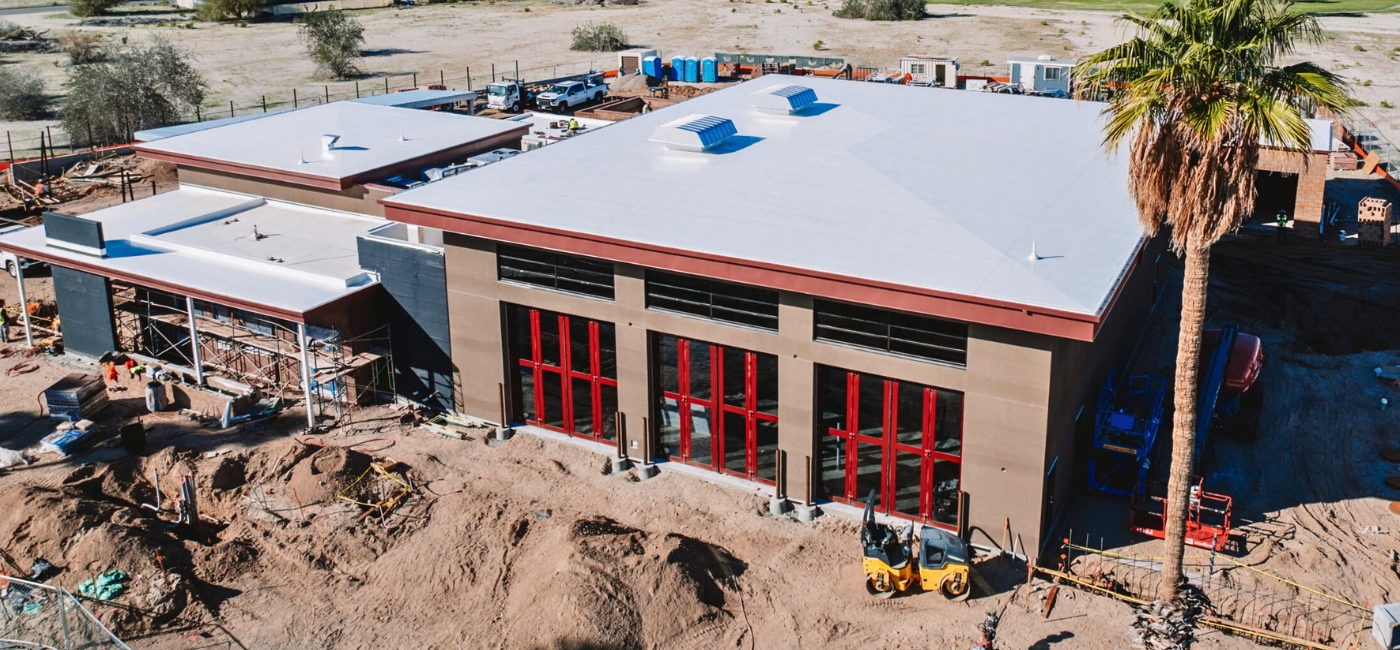
Retail store construction is not standard commercial build-out work. The contractor is accountable to a brand, a landlord, a permit jurisdiction, and an opening date that marketing and operations are already planning around. Each of those creates requirements that interact with the others, and the order in which they get addressed determines whether the project opens on time.
WakeCo provides construction management and general contracting for retail store construction across Southern California, including multi-site rollout programs and brand standard execution. Contact us to discuss your project.
Southern California’s Retail Market
Southern California has only 914,000 square feet of retail under development across the entire region, split roughly 48% Los Angeles, 25% Orange County, and 27% San Diego. In a market of over 500 million square feet, that pipeline is negligible. Orange County retail vacancy sits around 4 to 5%, and quality space in prime locations is absorbed almost immediately when it becomes available.
That supply constraint means retailers entering Southern California are often taking second-generation spaces, previously occupied by a different business category, rather than purpose-built shells. Change of use from one business category to another triggers current code compliance requirements that can include seismic retrofitting, new ADA-compliant restrooms, and parking ratio reviews that weren’t in the original project budget.
Retail investment sales in Southern California reached $4.38 billion in FY2025, a 72% jump from FY2024 and the highest total since 2022. That volume reflects how seriously institutional and private investors are treating the region’s retail fundamentals, and it signals that well-located retail spaces will continue to be contested.
The Requirements of Executing Brand Standards
A retail brand standard package defines the materials, finishes, fixture types, lighting specifications, and layout parameters that every store must replicate. The contractor executes that package at each site against conditions it wasn’t designed around. Real spaces have columns in positions the prototype didn’t anticipate, floor-to-ceiling heights that vary, and MEP infrastructure that doesn’t align with the drawings.
Construction teams in retail describe the process as “untying the knot,” where custom finishes, one-off vendor requirements, and material delays create a tangle of critical path items that experienced contractors manage from day one. Conflicts identified before construction documents are finalized are design adjustments. Conflicts discovered during plan check are schedule problems.
Landlord design manuals add another layer. Los Angeles plan checkers verify signage against the jurisdiction-approved Master Sign Program before approving permit applications. Signage that hasn’t been cross-checked against both the brand package and the MSP creates a correction cycle that doesn’t surface until plan check, directly compressing the schedule against a fixed opening date.
How Fixture Lead Times Shape the Schedule
Custom retail fixtures carry manufacturing lead times of 8 to 16 weeks for standard items, longer for complex or imported pieces. A contractor who initiates procurement during preconstruction absorbs those lead times into the design phase. One who treats fixture ordering as a construction-phase task builds them into the critical path, where they sit between framing completion and opening day.
Installation sequencing compounds the problem when handled wrong. Floors must be complete before freestanding fixtures are positioned. Electrical rough-in must be inspected before powered displays go in. Running those steps out of sequence creates rework that a schedule built backward from a fixed opening date cannot accommodate.
Quality inspection at receipt against brand package specifications prevents a separate category of delay. A damaged or non-conforming fixture discovered on delivery day requires a reorder that extends the schedule by weeks with no recovery path.
Permitting Across Southern California’s Jurisdictions
Retail construction in Southern California requires permits for construction, electrical, plumbing, accessibility upgrades, and in many cases fire life-safety reviews. Incomplete drawings or unclear scopes cause resubmittals that add weeks to the schedule, and each correction cycle extends lease obligations before opening. Los Angeles, Santa Monica, and West Hollywood run longer approval timelines than most Orange County jurisdictions.
Cities across Orange County and Greater Los Angeles have rolled out new e-permitting platforms with updated submittal checklists, and resubmittals caused by mismatched file formats or out-of-date checklists are a consistent source of avoidable delay. Confirming the current checklist and file standards with the local building department before submittal is a basic preconstruction step that contractors unfamiliar with the specific jurisdiction often skip.
Running landlord approval and city permit review in parallel rather than sequentially is the most effective way to protect the construction schedule. Both processes require complete, compliant submittals from the start. Treating them as sequential steps adds months to the preconstruction timeline that most retailers don’t have.
What Phased Rollouts Require That Single Builds Don’t
The most common failure mode in retail rollout programs is treating them as a series of individual projects rather than a coordinated program. Inconsistent scope documentation, overreliance on disconnected local contractors, and lack of centralized accountability produce brand standard deviations that compound location by location.
A standardized scope of work, schedule template, and quality checklist applied across every location keeps the program from degrading as it scales. That structure also surfaces which locations are tracking behind before they become opening day emergencies rather than after.
Permitting variation across Southern California’s jurisdictions is the variable that breaks otherwise well-run programs. Running submissions simultaneously across all locations, each prepared for that city’s specific requirements, is the only approach that keeps the overall program timeline intact.
Planning Your Retail Store Construction Program
The decisions that determine whether a retail project opens on time and on brand are made before construction starts. Fixture lead times, permit strategy, brand standard reconciliation with landlord requirements, and rollout phasing logic each belong in preconstruction. Resolving them there costs time. Resolving them in construction costs money.
Retailers who engage a contractor before lease execution or prototype finalization get that input while it can still change outcomes. Those who engage after absorb the cost of decisions made without it.
WakeCo brings the construction management experience and Southern California market knowledge retail construction programs require. Contact us to discuss your project and how our preconstruction process supports brand standard execution, fixture coordination, and on-time store openings.
Frequently Asked Questions
What does a retail brand standard package require of the contractor?
A brand standard package defines the materials, finishes, fixture types, lighting specifications, and layout parameters the contractor must execute at every location. The contractor reconciles those specifications against site-specific shell conditions and landlord design requirements before construction documents are finalized. Conflicts identified during preconstruction are design adjustments. Conflicts discovered during plan check are schedule problems.
How do fixture lead times affect a retail construction schedule?
Custom retail fixtures carry manufacturing lead times of 8 to 16 weeks for standard items. A contractor who initiates procurement during preconstruction absorbs those lead times into the design phase rather than the construction phase. Quality inspection at receipt against brand package specifications prevents damaged or non-conforming pieces from becoming critical-path problems on delivery day.
What permits does retail construction require in Southern California?
Retail construction in Southern California requires permits for construction, electrical, plumbing, accessibility upgrades, and in many cases fire life-safety reviews. Change of use, converting a space from one business category to another, can trigger current code compliance requirements including seismic retrofitting and ADA restroom upgrades. Incomplete submittals cause correction cycles that extend both the permit timeline and lease obligations before opening.
What causes multi-site retail rollouts to fail?
Rollout programs fail when treated as individual projects rather than a coordinated program. Inconsistent scope documentation, overreliance on disconnected local contractors, and lack of centralized accountability produce brand standard deviations that compound with each location. Programs built on standardized scopes, schedule templates, and quality checklists applied consistently across every location produce predictable results at scale.
When should a retailer engage a contractor for a retail construction program?
Before lease execution or prototype finalization. A contractor engaged at that stage can reconcile the brand package against each space’s conditions, identify fixture procurement timelines, map permit requirements across target jurisdictions, and establish the standardization framework the rollout program depends on. Those decisions are significantly less expensive to make before construction starts than to correct after they become problems.