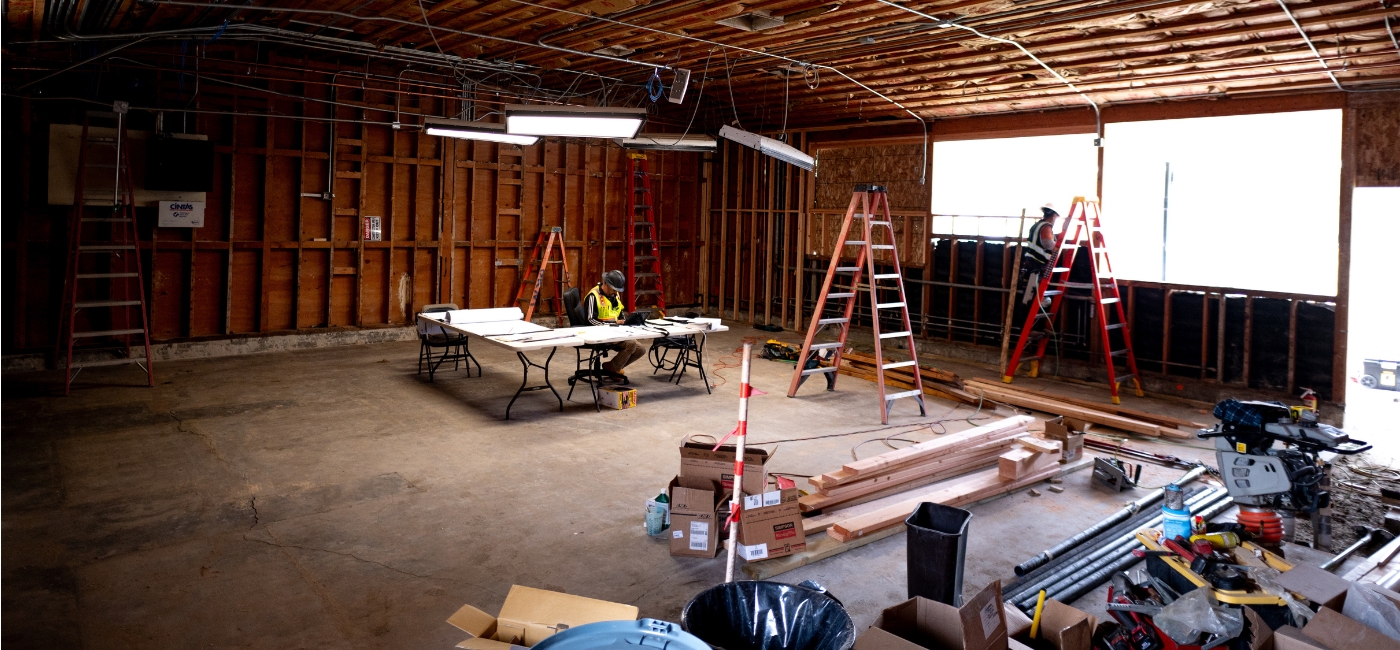
Orange County’s commercial real estate market spans 948 sq miles where office parks in Irvine, retail corridors along Beach Boulevard, and mixed-use developments throughout coastal cities create constant demand for tenant improvement work. Businesses relocating, expanding, or refreshing existing spaces drive a steady construction cycle requiring contractors who understand the concerns of both the landlords and their tenants.
The difference between a contractor who understands tenant improvement work and one who treats it like residential construction shows up in permit delays, landlord conflicts, and finish quality that fails to meet commercial standards.
WakeCo delivers tenant improvement construction throughout Orange County with experience across office and retail building types. Our approach addresses the coordination demands of occupied buildings, landlord approval processes, and the finish quality commercial tenants require to support their business operations.
Office Tenant Improvements in Orange County
Corporate Office Buildouts
Office tenant improvements range from open-plan environments with minimal partitioning to highly configured spaces with private offices, conference rooms, and specialized work areas. Each configuration carries distinct construction requirements — acoustic separation, technology infrastructure, and mechanical air distribution. Design decisions determine whether the finished space supports how a business actually operates.
Systems coordination determines functional performance more than finish selections in most office buildouts. HVAC distribution, electrical capacity, data cabling pathways, and lighting design require sequenced installation that inexperienced contractors routinely mismanage, creating expensive corrections after occupancy. WakeCo constructs office spaces with the systems integration experience that prevents these failures before they occur.
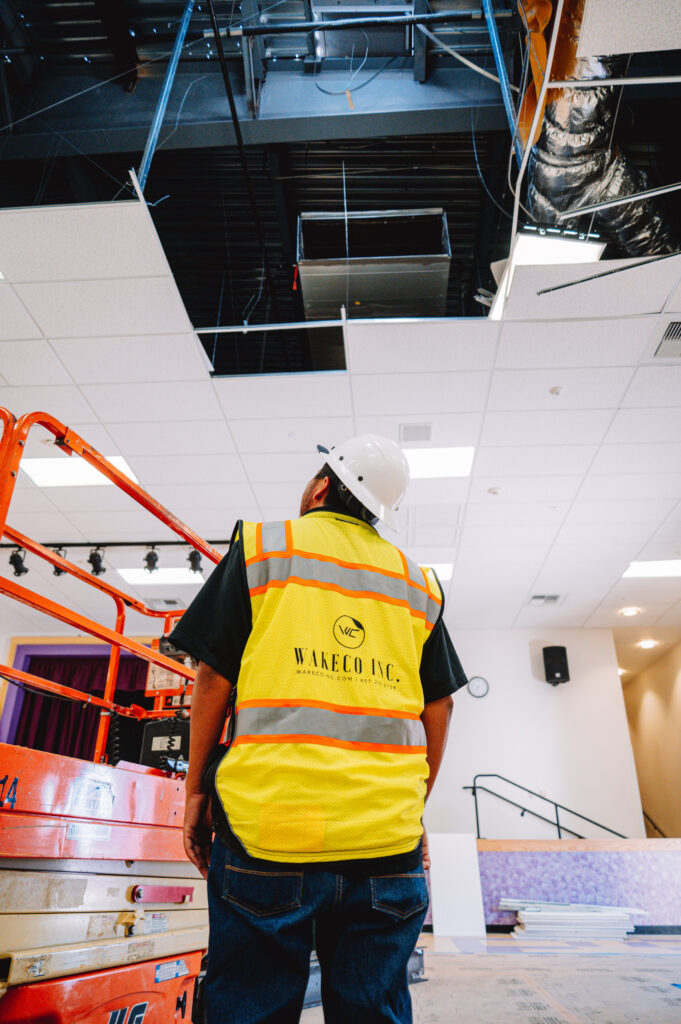
Medical and Professional Office Construction
Medical tenants represent the most technically demanding office improvements in Orange County’s market. Exam rooms require specific electrical configurations, plumbing for sterilization areas, and HVAC providing air change rates exceeding standard office requirements.
Imaging equipment demands structural reinforcement and dedicated electrical capacity beyond what standard allowances anticipate. Infection control standards affect finish selections, ventilation design, and construction sequencing in ways contractors without healthcare experience consistently underestimate.
Professional service tenants — law firms, financial advisors, accounting practices — require finish quality and acoustic performance reflecting their client-facing environments. Sound transmission between conference rooms and adjacent spaces directly affects client confidentiality and professional perception. These aren’t aesthetic preferences — they’re functional requirements with business consequences when construction fails to deliver them.
WakeCo coordinates medical and professional office buildouts with code compliance for specialized occupancies, equipment infrastructure requirements, and finish execution meeting the standards these tenants need to serve their clients effectively.
Occupied Building Construction
Most Orange County office improvements occur within buildings that remain operational during construction. Neighboring tenants, shared mechanical systems, and building management requirements create constraints that residential contractors and inexperienced commercial crews routinely underestimate. A superintendent who hasn’t managed occupied commercial construction will create problems with property management that follow the project for long after.
Dust containment, noise scheduling, elevator coordination, and after-hours work requirements must integrate with construction planning from the start — not addressed reactively when complaints arise. WakeCo structures tenant improvement projects around occupied building protocols, coordinating with property management and scheduling disruptive work to protect neighboring tenants and building operations throughout construction.
Retail Tenant Improvements in Orange County
Storefront and Customer-Facing Buildouts
Retail construction prioritizes the customer experience environments that drive sales performance. Storefront glazing, interior circulation, display infrastructure, lighting design, and finish selections communicate brand identity while supporting operational requirements. These elements must integrate with base building systems — mechanical, electrical, plumbing — that landlords provide at varying levels of completeness across Orange County’s retail inventory.
Finishes that deteriorate prematurely, lighting that fails to showcase merchandise, or HVAC that creates uncomfortable shopping conditions represent construction failures with measurable revenue consequences. WakeCo builds retail spaces understanding that construction quality directly affects the commercial performance of the tenant’s business, not just the appearance of the space at opening.
Restaurant and Food Service Buildouts
Restaurant tenant improvements represent the most complex retail construction in Orange County’s market. Commercial kitchens require exhaust systems, grease interceptors, specialized gas infrastructure, and NSF-compliant finishes that standard retail construction rarely involves.
Health department requirements add inspection milestones and compliance standards affecting both construction sequencing and material specifications — a missed inspection or non-compliant installation delays opening and burns through the operating capital tenants have allocated for launch.
Front-of-house construction must balance aesthetic ambition with durability. Flooring, surfaces, and fixtures endure traffic volumes that residential-grade materials cannot sustain regardless of how appropriate they look at installation. WakeCo constructs restaurant spaces with experience across fast-casual, full-service, and specialty food concepts, coordinating health department inspections and utility connections that determine opening timelines.
Fitness, Wellness, and Specialty Retail
Orange County’s retail market includes fitness studios, medical spas, and specialty concepts that carry construction requirements beyond standard retail buildouts. Fitness facilities require reinforced flooring for equipment loads, HVAC capacity handling elevated occupant density, and acoustic treatment preventing sound transmission to adjacent tenants.
Medical spas and wellness concepts often require plumbing configurations and finish standards approaching medical office requirements. Contractors without experience in these building types routinely underbid the work and underdeliver on the result.
WakeCo approaches specialty retail with the same pre-construction investigation that complex office buildouts require — confirming base building capacity, identifying coordination requirements with landlord systems, and establishing realistic budgets before lease execution commits tenants to spaces their improvement budgets cannot actually finish.
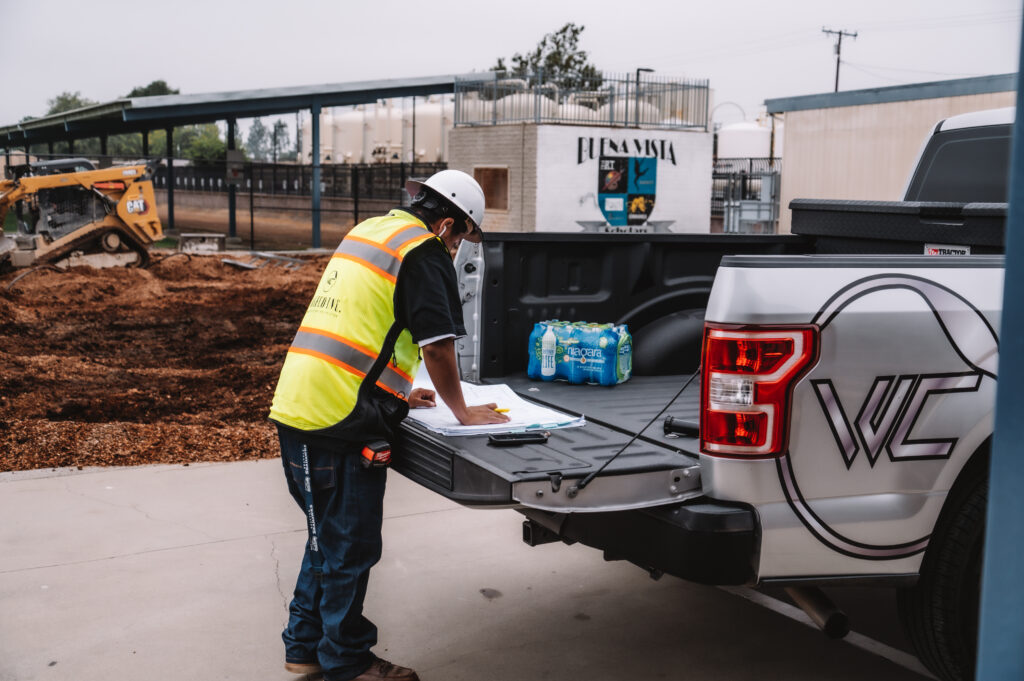
Navigating Orange County Landlord and Permit Requirements
Tenant improvements in Orange County require landlord approval of construction documents before permit applications proceed. This review adds 2–4 weeks to preconstruction timelines that inexperienced contractors fail to account for in project schedules. Missing this step or submitting incomplete documents creates resubmittal cycles that push occupancy dates and erode budgets.
Building departments across Orange County’s 34 cities each administer permits independently, creating jurisdiction-specific review timelines and documentation requirements. Irvine, Anaheim, Santa Ana, and coastal cities each maintain distinct processes affecting submittal requirements and review timelines. Standard commercial tenant improvement permits complete review in 3–6 weeks with complete submittals — incomplete applications routinely double that timeline.
WakeCo structures permit submittals addressing both landlord and building department requirements before initial filing. Our preconstruction process identifies jurisdiction-specific requirements early, structures construction documents to clear both review processes efficiently, and schedules construction to begin immediately upon permit issuance rather than waiting on incomplete planning.
Frequently Asked Questions
What does a tenant improvement allowance typically cover in Orange County?
Tenant improvement allowances typically cover standard construction — partitioning, ceiling systems, HVAC distribution, electrical to code, basic plumbing, and standard finishes. Specialty equipment, above-standard finishes, and technology infrastructure often fall outside allowance scope. Understanding what your allowance covers before lease execution prevents budget surprises during construction.
How long does a typical office tenant improvement take in Orange County?
Standard office buildouts of 2,000–5,000 square feet typically require 6–10 weeks of construction following permit approval. Medical offices and highly configured spaces run 10–14 weeks. Add 4–8 weeks for design, landlord approval, and permitting before construction begins. Total timelines from lease execution to occupancy commonly run 3–5 months.
Do tenant improvement contractors need to coordinate with the landlord’s team?
Yes, and this coordination significantly affects project execution. Landlords typically require approval of contractors, insurance certificates, construction documents, and material specifications before work begins. Some landlords maintain base building systems that their own contractors must modify, requiring scheduling coordination with your improvement contractor throughout construction.
What’s the difference between a shell space and a second-generation buildout?
Shell spaces are unimproved — concrete floors, exposed structure, and only base building utilities stubbed in. They require complete tenant improvement construction and carry the highest buildout costs. Second-generation spaces retain prior tenant improvements that reduce construction scope when the layout aligns with the incoming tenant’s needs. Understanding which you’re leasing before budget planning matters considerably.
Why does restaurant construction cost significantly more than standard retail?
Commercial kitchen requirements — exhaust hoods, grease interceptors, gas infrastructure, specialized plumbing — add $40,000–$120,000 in systems costs beyond standard retail construction. Health department compliance, fire suppression in kitchen areas, and durable front-of-house finishes add further cost. Restaurant tenant improvement budgets of $150–$300 per square foot are common in Orange County’s market.